
What Type of Outdoor Furniture Is the Most Durable?
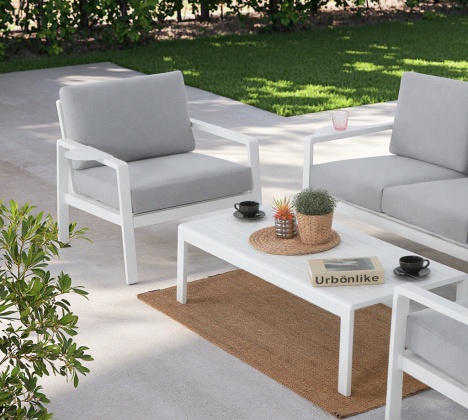
For the majority of B2B procurement professionals tasked with sourcing high-resilience outdoor furniture, powder-coated aluminium constitutes the baseline optimal substrate. It delivers superior corrosion resistance relative to conventional carbon steel, reduces logistical and storage overheads via low unit mass, and demonstrates universal adaptability to contemporary outdoor sofas, dining configurations, lounge units and balcony furniture assemblies. Nevertheless, raw substrate advantage does not equate to guaranteed service longevity; aluminium merely furnishes a structurally robust foundational framework compared to alternative materials.
True product durability undergoes rigorous multi-stage operational testing post-manufacturing: transoceanic maritime transit, mechanical abrasion during warehouse handling, prolonged static showroom display, sustained high ambient temperature, liquid spill contamination, water saturation of upholstered cushions, and incidental physical damage from end-user interaction. Even products marketed with high-strength substrate specifications may generate substantial warranty liabilities if characterised by insufficient coating thickness, structural frame deflection, water retention within cushion substrates, or inadequate carton packaging that induces frame surface abrasion during shipment.
For many enterprises establishing recurring commercial outdoor furniture lines, properly pretreated and powder-coated aluminium is one of the most operationally practical long-term procurement options.
Durability Benchmarks Are Contingent Upon Business Segmentation & After-Sales Liability Frameworks
The definition of functional durability varies materially across distinct client verticals. Hotel terrace operators require furnishings compatible with rapid sanitary cleansing and displacement without substrate abrasion to flooring surfaces. Horticultural retail centres demand display inventory that retains aesthetic integrity following prolonged tactile contact, frequent repositioning and repeated load-bearing by prospective customers. E-commerce merchants face discrete supply chain vulnerabilities: products must withstand multi-layer packaging, last-mile distribution, consumer self-assembly and unregulated user-generated product imagery review cycles.
This contextual variance renders generic substrate ranking matrices misleading for procurement decision-making. Aluminium delivers the most balanced durability profile for general commercial patio furniture applications. Teak hardwood exhibits superior performance within premium high-end development projects where scheduled maintenance protocols are formally embedded into asset management workflows. Synthetic PE rattan achieves acceptable service life only when integrated with reinforced load-bearing frames and uniform tight-weave construction. Steel-rope composite furniture is a viable category, yet necessitates granular supplier dialogue addressing coating specification standards and integrated fluid drainage architecture.
Underlying Technical Advantages of Powder-Coated Aluminium for Universal Commercial Deployment
Aluminium mitigates a spectrum of recurring operational pain points for commercial purchasers through intrinsic material properties. Its low specific mass facilitates streamlined inventory handling and restocking cycles; it eliminates ferrous oxidation risks inherent to unprotected carbon steel, and aligns with the minimalist contemporary design language prevalent within global retail outdoor furniture markets. Manufacturers further leverage aluminium’s formability to engineer fully modular sofa systems, standalone dining seating and complementary coffee table units without producing unwieldy, aesthetically outdated heavyweight collections.
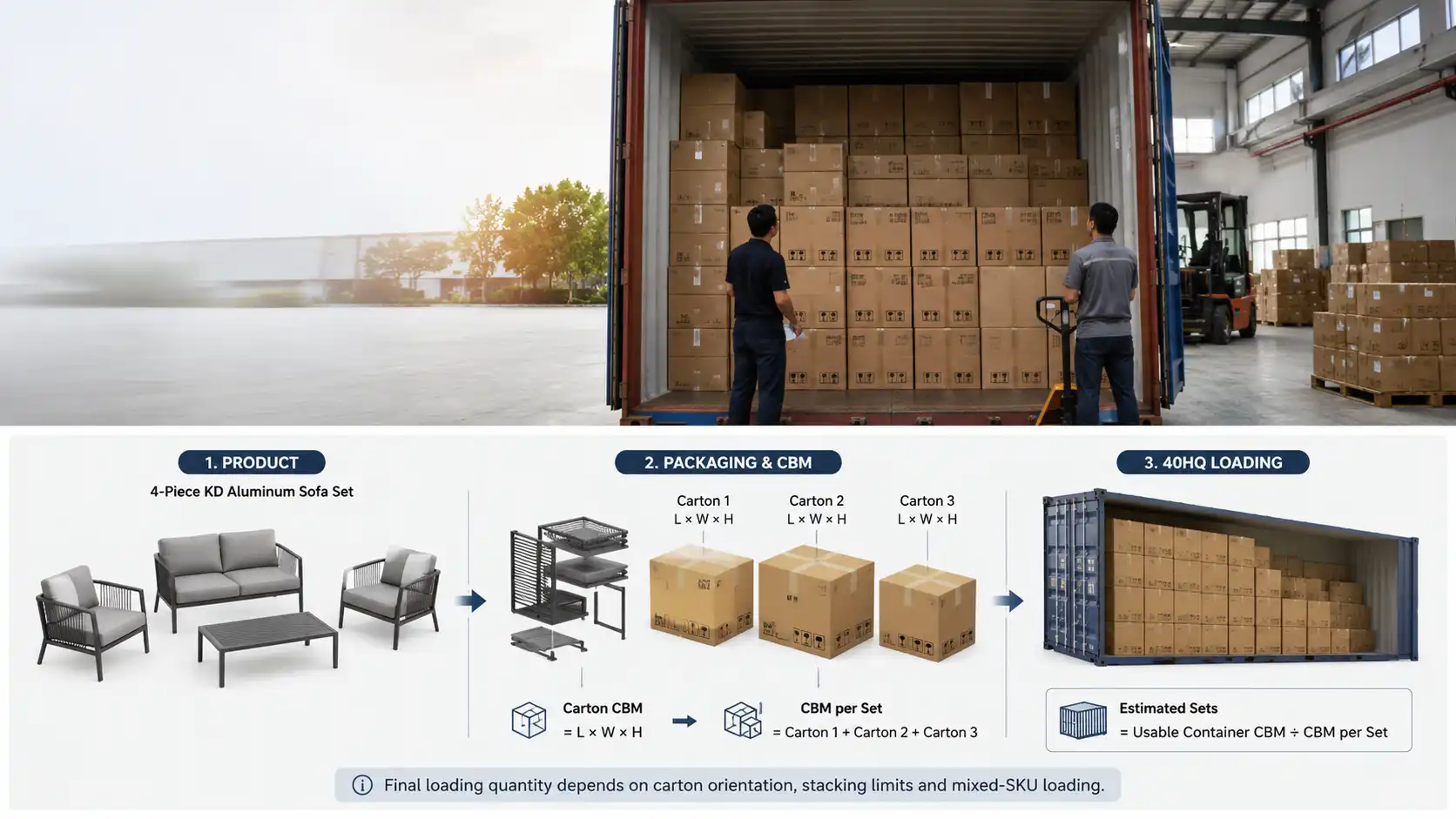
Joye Leisure’s Greenville KD 4-Piece Aluminium Sofa Set illustrates several key specifications that buyers should verify through supplier documentation, samples, and pre-order quality checks. Its technical datasheet enumerates an extruded aluminium structural frame, industrial-grade outdoor powder coating, hand-woven rope decorative detailing, UV-stabilised polyester cushion textiles, single-unit carton packaging, a 45-day manufacturing lead time, container load capacity of 331 sets per 40-foot HQ vessel container, minimum order quantity of one full 40HQ container, and customisable chromatic finishes alongside bespoke carton printing and structural packaging modifications. These specifications are not ornamental marketing verbiage; they directly govern the operational efficiency of sourcing workflows, packaging engineering, container logistics planning and recurring replenishment order cycles.
Mandatory technical audit criteria for aluminium frame supplier due diligence:
- Prioritise coating performance over substrate composition alone: Serviceable structural frames require continuous fusion weld joints, precision deburred edge finishing, reinforced corner reinforcement brackets, non-slip polymer foot caps, integrated drainage apertures, and abrasion-resistant surface finishes engineered for permanent outdoor exposure.
- Classify upholstered cushions as core functional components: The majority of customer complaints ostensibly attributed to frame failure originate from substandard textile substrates, water-retentive filler media, low-tensile zipper assemblies, slow-moisture-dissipation cushion inserts, or non-standardised maintenance specification labelling.
- Conduct pre-production packaging sample validation: Surface abrasion of powder-coated frame components upon delivery constitutes a material durability failure prior to end-user deployment, mandating evaluation of carton shock absorption and corner protective reinforcement protocols.
Targeted Application Scenarios for Teak and Dense Hardwood Furnishings
Teak outdoor furniture has established industry recognition as a premium substrate for high-value outdoor real estate developments. Its high-density timber composition delivers substantial tactile premium positioning, coupled with a natural oxidation patina that matures uniformly under scheduled maintenance regimes. Fully kiln-stabilised dense hardwood assemblies permit on-site sanding and refinishing, a critical operational advantage for resort assets, private villa estates and high-spec hospitality furniture programmes with dedicated in-house asset maintenance teams.
Hardwood substrates carry inherent operational trade-offs that require formal disclosure to downstream clients. Natural timber exhibits chromatic discoloration over service life, minor surface fissuring, liquid staining susceptibility, dimensional swelling under high relative humidity and desiccation cracking in arid climatic zones. Even heavy-duty solid hardwood garden furniture generates elevated after-sales overheads if suppliers compromise timber grading standards, kiln moisture stabilisation cycles, multi-layer protective sealant application, corrosion-resistant fastener hardware, or standardised maintenance documentation. Hotel asset management teams typically absorb this recurring maintenance burden, yet mass retail consumers demonstrate low tolerance for such upkeep requirements—a disparity that drives incremental post-purchase support liabilities.
Synthetic PE Rattan Service Longevity Is Predicated Upon Concealed Structural Subframe Integrity
A critical technical delineation for procurement stakeholders: natural raw rattan is only suitable for fully enclosed indoor or semi-sheltered outdoor environments. Virtually all weather-resistant exterior wicker furniture utilises UV-stabilised synthetic PE rattan woven over reinforced metallic subframes. When integrated with load-bearing structural frames and consistent tight-weave construction, PE rattan delivers durable, commercially marketable seating solutions for residential horticultural spaces, aquatic facility peripherals, compact balcony installations and resort-grade lounge suites.
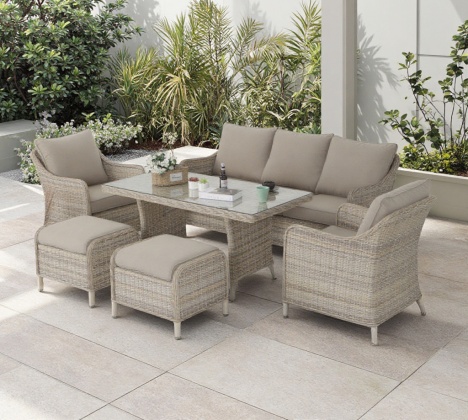
JoyeLeisure’s New Goteborg 6-Piece Rattan Sofa Set exemplifies transparent, supplier-disclosed technical specifications mandatory for procurement validation: all-weather UV-resistant PE rattan weave, heavy-gauge aluminium load-bearing subframe, water-repellent spun poly cushion textiles, individual set segmentation across four protective cartons, 45-day manufacturing lead time, one full 40HQ container minimum order quantity, and customisable frame chromatic finishes alongside bespoke carton structural design and branding printing. For procurement departments, this full suite of technical specifications carries greater decision-making weight than the standalone descriptive term “rattan” within product catalogues.
Structurally reinforced PE rattan assemblies deliver consistent service life for resort-style outdoor seating ranges; however, weaving uniformity, surface coating integrity and upholstery construction require exhaustive pre-production quality audits.
Nearly all rattan furniture functional failures stem from fundamental design oversights: unconstrained weave fraying at frame junctions, subframe deflection under off-centre load application, uneven UV-induced chromatic fading, low-tensile cushion cover textiles, and absent supply chain protocols for replacement woven panels or upholstery inserts. While rattan products demonstrate high visual marketability within digital retail assets, procurement teams must conduct real-world wear testing to evaluate weave integrity under sustained tensile manipulation, edge load-bearing, repeated liquid contamination, and prolonged unsheltered cushion exposure.
Steel-Rope Composite Furnishings Mandate Rigorous Supplier Technical Vetting
Steel structural frames deliver high inherent compressive strength, whilst textile rope weaving furnishes a lightweight contemporary design lexicon distinct from conventional wicker assemblies. This substrate combination is operationally viable for semi-sheltered hotel terraces, residential garden lounge zones and mid-tier commercial outdoor furniture product portfolios. It does not constitute a low-maintenance universal solution, particularly within coastal high-salinity, high-humidity climatic markets.
Steel Rope 5-Piece Sofa Set establishes a formal template for supplier technical specification review: heavy-gauge carbon steel frames treated with industrial outdoor powder coating, hand-woven textile rope detailing, water-resistant spun poly upholstery cushions, single-set carton packaging, 45-day manufacturing lead times, one 40HQ container minimum order quantity, and fully customisable frame colour finishes and branded carton packaging engineering. Procurement departments must leverage disclosed specifications to interrogate frequently overlooked functional design parameters: continuous weld coverage to eliminate oxidation hotspots, integrated fluid drainage channels for trapped precipitation, abrasion-resistant polymer foot caps, formal coating thickness benchmarks, dedicated off-season upholstery storage specifications, and internal carton shock-absorption packaging for transit mitigation.
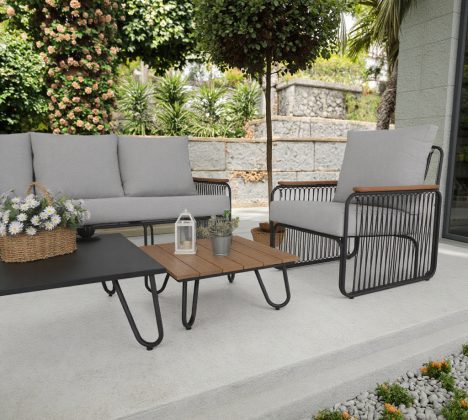
Steel-rope composite furnishings demonstrate optimal operational performance within garden lounge environments, provided surface coating specifications, internal drainage engineering and upholstery maintenance protocols are formalised during pre-production supplier negotiations.
Steel frames possess intrinsic structural durability; however, ferrous oxidation propagates rapidly following coating chipping, standing water accumulation within hollow frame lumens, or inadequate drainage architecture. This technical limitation does not preclude steel as a viable substrate category; it necessitates targeted product allocation aligned with regional climatic profiles, target price segmentation and formalised end-user maintenance disclaimers.
Composite and Recycled Plastic Substrates Are Not Universal Low-Maintenance Alternatives
Composite lumber and post-consumer recycled plastic outdoor furniture occupy a niche procurement category for stakeholders prioritising minimal asset maintenance over natural timber or woven aesthetic attributes. Public amenity seating, short-term rental property patio installations and entry-level retail furniture ranges benefit from substrates resistant to sustained moisture exposure and recurring industrial cleansing cycles.
Physical sample validation remains a non-negotiable prerequisite prior to bulk composite substrate order commitment. Multiple composite formulations exhibit excessive thermal absorption under direct solar irradiance, generating surface temperatures incompatible with unprotected human contact. Alternative variants possess excessive unit mass, introducing logistical complexities for retail distribution and consumer self-assembly. Aesthetic incompatibility frequently arises when composite assemblies are merchandised alongside teak, aluminium or rattan furniture within unified product portfolios. Prior to formalising composite product line procurement, sample testing must encompass UV chromatic fading resistance, fastener tensile strength, surface scratch resilience, supporting slat structural integrity and residual water marking susceptibility post-cleansing.
Substrate Selection Must Align With Primary Operational Risk Mitigation Objectives
The technically optimal durable outdoor furniture solution is the substrate that neutralises an enterprise’s dominant operational failure vectors. Coastal catering establishments prioritise corrosion resistance as the primary performance metric. Aquatic facility hotel zones require fast-moisture-dissipation, stain-resistant upholstery systems. Horticultural retail display inventory sustains greater mechanical abrasion from constant customer interaction relative to standard residential deployment. E-commerce retail brand review performance is directly correlated with packaging structural integrity and standardised assembly procedural documentation.
Formal substrate selection matrix aligned with enterprise risk mitigation priorities:
- Powder-coated aluminium:Specify for product lines requiring minimal ongoing maintenance, streamlined contemporary design aesthetics, and consistent scalable mass production for recurring bulk replenishment orders.
- Teak or dense hardwood:Deploy for premium development projects centred on organic natural material positioning, where asset owners allocate formal budgets for scheduled timber sealing and refinishing maintenance cycles.
- PE synthetic rattan:Select for portfolios targeting tropical resort aesthetic positioning; mandatory pre-order technical audits encompass subframe reinforcement, weaving uniformity, upholstery quality and spare component supply chain protocols.
- Steel-rope composite: Adopt where target price segmentation and contemporary rope design language align with merchandising strategies, contingent upon formal supplier alignment on coating thickness standards, internal drainage architecture and regional climatic suitability.
- Composite/recycled plastic:Procure when zero-maintenance functionality constitutes the primary selling proposition; complete thermal performance, tactile texture, UV fading and unit mass validation via physical sample testing prior to bulk order execution.
Supplier Manufacturing Quality Protocols Supersede Generic Catalogue Substrate Labelling
Printed substrate descriptors within product catalogues require minimal production overheads; consistent, long-cycle manufacturing quality control frameworks incur substantial operational capital expenditure. Prior to finalising large-volume commercial outdoor furniture wholesale contracts, procurement stakeholders must demand high-resolution reference imagery of critical structural assemblies: furniture foot cap components, frame fusion weld joints, table edge finishing treatments, armrest load-bearing brackets, underside stabilising webbing, corner weave tension uniformity, upholstery seam construction and full carton shock-absorption packaging architecture. Polished lifestyle marketing imagery provides zero visibility into long-term service-life performance metrics.
Accredited tier-one suppliers shall furnish full transparency across all logistical and after-sales operational variables during formal tender consultations: minimum order quantity regulatory frameworks, factory production lead time schedules, prototype sample manufacturing terms, custom chromatic finish palettes, bespoke carton branding engineering, container load optimisation planning, spare component perpetual inventory stock provisions and formal defective goods liability resolution procedures. Ambiguous, evasive supplier responses to these technical and commercial parameters indicate unmitigated quality risk exposure borne exclusively by the purchasing enterprise, concealed by superficial catalogue visual assets.
JoyeLeisure’s End-to-End Sourcing Framework for Data-Driven Substrate Decision-Making
JoyeLeisure maintains an extensive full-spectrum outdoor living product portfolio, eliminating single-substrate constraints for procurement tender briefs. The outdoor furniture product catalogue encompasses synthetic rattan woven assemblies, minimalist open-frame seating systems, cast and extruded aluminium structural frames, and injection-moulded plastic modular solutions. This diversified product portfolio enables direct benchmarking of aluminium, PE rattan, textile rope, steel and composite substrates against unified market positioning, price segmentation and durability performance criteria.
When developing a high-service-life outdoor furniture product portfolio, structured supplier consultation shall commence with formal vertical segmentation definition: hospitality hotel asset supply, retail distribution networks, commercial real estate development contracting, e-commerce digital retail sales or horticultural retail display inventory. Subsequent evaluation parameters encompass regional climatic operating conditions, target retail price tier thresholds, transit packaging engineering specifications, mandated design aesthetic standards and formalised after-sales service liability frameworks. Formal codification of these operational parameters streamlines evidence-based substrate selection.
Formal Procurement Recommendation
For the overwhelming majority of B2B wholesale procurement stakeholders, powder-coated aluminium delivers the most balanced long-term durability performance profile. It integrates superior anti-corrosion performance, low unit mass for streamlined logistics, scalable industrial manufacturing, versatile contemporary design compatibility and simplified cross-channel commercial asset management. Teak hardwood functions as a premium long-service-life alternative exclusively for development projects with dedicated recurring maintenance capital allocations. PE synthetic rattan achieves consistent operational longevity and strong retail conversion rates when integrated with reinforced structural subframes and uniform tension weaving. Steel-rope composite assemblies remain a viable procurement category, yet necessitate intensified technical auditing of protective coating specifications and internal fluid drainage architecture.
Procurement departments do not require condensed marketing taglines describing substrate performance; they require fully validated product portfolios engineered to withstand every stage of the global supply chain and downstream retail distribution lifecycle. To conduct comparative technical evaluation of aluminium, rattan, textile rope and supplementary heavy-duty patio furniture substrates tailored to bespoke regional market requirements, engage JoyeLeisure for end-to-end outdoor furniture technical sourcing advisory services. Disclosure of intended deployment vertical, annual order volume, transit packaging engineering mandates, chromatic finish specifications and long-term climatic operating parameters will facilitate customised substrate performance recommendations aligned with enterprise risk tolerance thresholds.
FAQ
- Which substrate delivers the maximum service life for commercial outdoor furniture deployment?
Powder-coated aluminium represents the optimal universal substrate for B2B commercial procurement stakeholders. It demonstrates markedly superior oxidation resistance relative to unprotected carbon steel, retains logistically advantageous low unit mass, and exhibits universal compatibility with all mainstream outdoor furniture ensemble design typologies.
- Does teak hardwood outperform aluminium in long-term durability metrics?
Teak hardwood delivers exceptional service life within high-value premium development assets, yet imposes mandatory scheduled maintenance cycles and rigorous timber traceability certification requirements. Aluminium constitutes a lower-liability, minimal-upkeep substrate solution for mass retail distribution, hospitality asset programmes and general wholesale distribution networks.
- Is synthetic PE rattan classified as a viable high-durability patio furniture substrate?
Affirmative, subject to two core preconditions: the PE rattan weave is mounted atop a heavy-gauge fully coated metallic subframe, and paired with industry-standard weather-resistant upholstery textiles. Procurement stakeholders must conduct formal audits of weaving tension uniformity, underside structural bracing integrity, UV chromatic stability, textile substrate grading, transit packaging shock absorption and spare component supply chain frameworks prior to executing bulk procurement contracts.
- What mandatory technical audits must be completed prior to executing bulk outdoor furniture procurement contracts?
Formal validation criteria encompass structural frame integrity testing, exterior protective finish performance, fusion weld joint quality assurance, abrasion-resistant foot cap engineering, non-ferrous fastening hardware compliance, commercial-grade outdoor upholstery textile certification, standardised maintenance specification labelling, shock-absorbent transit packaging architecture, minimum order quantity contractual terms, factory production lead time schedules, container load capacity optimisation, custom chromatic finish compatibility and supplier perpetual spare component inventory support protocols prior to formalising large-volume wholesale furniture procurement agreements.