
How Long Does It Take to Build an Outdoor Kitchen
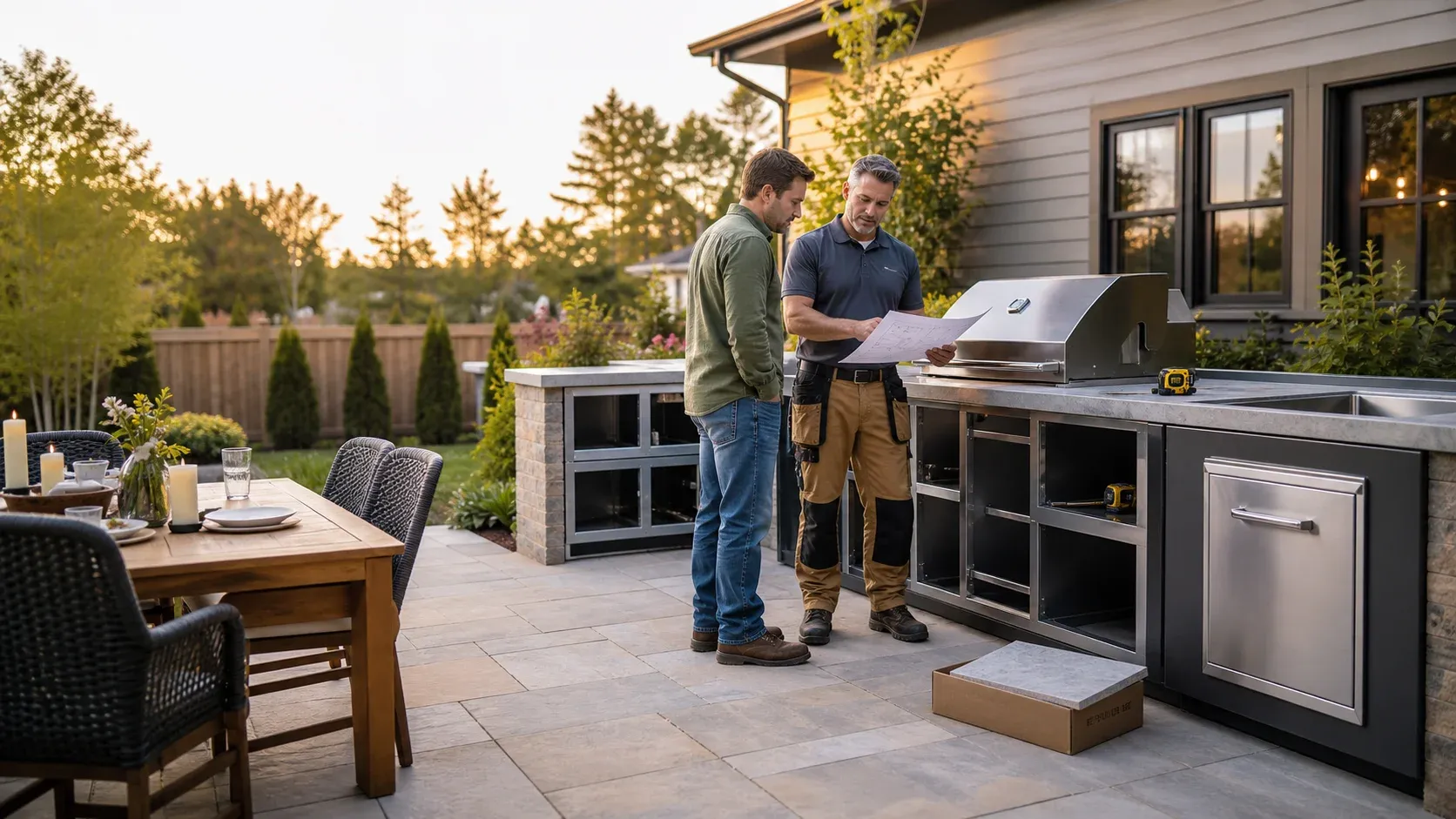
If your patio is already level and the kitchen arrives in ready-made sections, assembly may take only a day or two. Add a sink, permanent gas line, custom countertop, or new paving, though, and the calendar changes quickly. Most professionally installed outdoor kitchens need about four to eight weeks of on-site work. The full journey from the first sketch to the first cookout may take eight to twelve weeks.
Here’s where estimates get confusing. One contractor may start counting when the cabinets arrive, while another includes design reviews, permits, manufacturing, and delivery. Before booking outdoor kitchen specialists, ask exactly when their clock starts. If you need the space ready for a birthday or summer party, leave at least one extra week for testing and small fixes.
How Long Does an Outdoor Kitchen Usually Take?
Picture two backyards. The first already has a solid patio, nearby power, and space for a straight modular kitchen. The second needs excavation, a concrete base, plumbing, gas, and a made-to-fit countertop. Calling both projects an “outdoor kitchen installation” hides a huge difference in the work involved.
These ranges are more useful than one average figure:
| Project Type | On-Site Time | Total Timeline |
| Portable grill and prep station | A few hours to 2 days | A few days |
| Modular kitchen without new utilities | 1–3 days | 2–6 weeks |
| Modular kitchen with utilities | 1–2 weeks | 4–8 weeks |
| Semi-custom built-in kitchen | 3–6 weeks | 6–10 weeks |
| Fully custom kitchen | 6–10 weeks | 8–16 weeks or more |
The short on-site time for a modular kitchen can be misleading. Cabinets may go together quickly, but someone still has to check the patio, confirm measurements, arrange delivery, and prepare any utility points.
A modular steel outdoor kitchen can combine cabinets, shelves, worktops, storage, and a sink in ready-made units. When the site is prepared before delivery, installation stays fairly simple. If the floor needs leveling or the sink position does not match the water connection, those “quick” units may sit unopened while other work catches up.
What Happens During the Outdoor Kitchen Timeline?
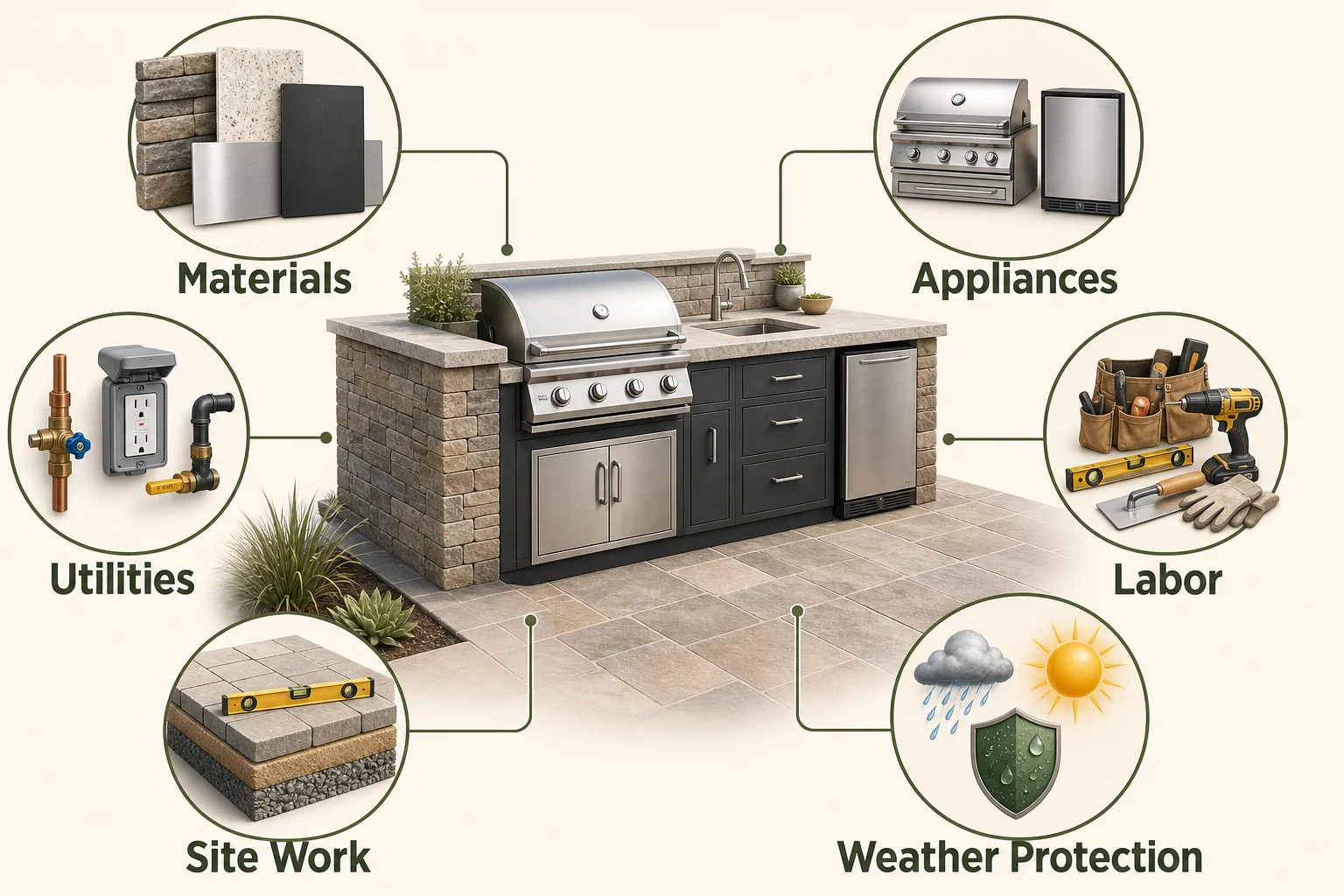
The work does not move at the same speed every day. Some stages involve active construction. Others involve waiting for products, inspections, or countertop fabrication.
Design and Product Selection
Allow one to two weeks for a simple design. A custom layout may take longer.
Settle the important choices early:
-
Where will people cook, serve, and sit?
-
Do you need water, gas, or electricity?
-
Which grill and sink fit the cabinets?
-
Is there enough room around hot appliances?
-
Can the cook still talk with guests?
Choose built-in appliances before cabinet production begins. Changing the grill later can affect the opening, countertop, gas connection, and ventilation clearance.
If you are deciding between a full kitchen and a grill station, this outdoor kitchen and BBQ grill guide can help you judge how much equipment you actually need.
Permits and Site Preparation
Permit rules vary. A portable setup may need no approval, while permanent gas, electrical, plumbing, masonry, or roofing work often requires permits and inspections.
The site must also be stable and level. Cabinets, grills, countertops, and stored cookware add weight. A slight slope can leave cabinet doors out of line or allow water to collect beneath the units.
This part is not exciting. Nobody shows guests a perfectly level base. Still, correcting poor groundwork after installation takes far longer than checking it before delivery.
Utility Work
Water, gas, and electrical work may take three to seven working days when trades are properly scheduled. Inspections can add more time.
A kitchen near the house is often faster because supply lines travel a shorter distance. Moving it across the yard may require trenching through soil, paving, or landscaping.
Consider which connections you truly need. A cold-water sink may be enough for handwashing and light cleanup. A portable propane grill may avoid a permanent gas line. Fewer utilities usually mean a shorter project.
Cabinet and Appliance Installation
Modular cabinets arrive close to their final form. Custom frames, stonework, and fabricated countertops need more time.
Material details matter. A representative multifunctional outdoor kitchen cabinet may use a 201 stainless steel countertop with a 304 stainless steel sink and faucet. The counter handles food preparation and impact, while the sink stays in regular contact with water.
Do not accept “stainless steel kitchen” as a complete specification. Ask what the top, sink, faucet, frame, doors, and hardware are made from.
Custom countertops can create another pause. Final measurements are often taken only after the cabinets or surface finish are installed. Fabrication begins after that.
Final Testing
Allow several days for connections, adjustments, cleaning, and inspection. Test the kitchen before your first large gathering.
Run the tap. Check the drainage. Open every cabinet. Light the grill according to its instructions. Make sure guests can reach the dining area without crossing the cook’s hot zone.
A small family meal makes a better first test than a party for twenty. You may discover that serving plates have nowhere to land. Better to find that out on a quiet Tuesday.
What Can Delay an Outdoor Kitchen Project?
Most delays come from small decisions made too late. A changed sink affects plumbing. A larger grill changes the cabinet opening. A new countertop finish adds fabrication time.
Late Product Decisions
Confirm the grill, refrigerator, sink, and side burner before final production or framing. Their exact dimensions affect the surrounding structure.
Manufacturing and delivery are separate from installation. Ask for both the dispatch date and expected arrival date. Regional delivery, freight, or damaged packaging may alter the schedule.
Weather and Ground Conditions
Rain can stop excavation, concrete work, coating, or electrical installation. Cold weather can affect masonry and water lines. Coastal locations need suitable corrosion protection.
Powder-coated steel provides a protected outdoor surface, but scratches and exposed edges still need care. Product guidance also recommends suitable anti-rust treatment for exposed tubes in marine climates. This outdoor kitchen cabinet guide explains what to check when comparing outdoor materials.
Poor Trade Scheduling
A plumber cannot finish when the sink location keeps changing. A countertop cannot be measured accurately before the cabinets are fixed. An electrician may need to return if appliance power requirements were not confirmed.
Outdoor kitchen specialists save time by arranging these tasks in the right order. Their value is not simply working faster. It is preventing one unfinished job from blocking the next.
Does a Modular Outdoor Kitchen Take Less Time?
Usually, yes. Its main components are manufactured before delivery, so you avoid weeks of on-site framing and cabinet construction.
Modular systems work well when:
-
The patio is already sound and level
-
The layout uses standard-sized units
-
Utility points are ready
-
You want to add or rearrange parts later
A sloped yard, unusual corner, roof, or long utility run will still add work. Modular construction shortens cabinet installation. It does not remove every other stage.
Assembly details help too. Knowledge-base product guidance lists hardware bags and gloves among the standard accessories for outdoor kitchen cabinets and racks. For cleaning, grease should be wiped promptly with a damp cloth and mild dish soap. These small details make handover and daily use easier.
Can You Finish an Outdoor Kitchen Before a Party?
Yes, but work backward from the event and leave a buffer.
-
Eight to twelve weeks before: Set the budget, location, and kitchen type.
-
Six to eight weeks before: Confirm appliances, cabinets, and utilities.
-
Four to six weeks before: Complete permits and site preparation.
-
Two to four weeks before: Install the kitchen and connections.
-
At least one week before: Test, clean, and correct small problems.
Do not plan the party for the contractor’s estimated completion day. If the event is only three weeks away, choose a simple modular grill station instead of a custom kitchen with several utilities.
Should You Hire Outdoor Kitchen Specialists?
DIY may work when the patio is ready, the setup is small, and permanent utilities are not required. Professional help becomes more useful when the project includes gas, electricity, plumbing, permits, custom surfaces, or several trades.
Before hiring a specialist, ask:
-
What does the timeline include?
-
Who handles permits and inspections?
-
When must appliance dimensions be confirmed?
-
Who deals with delayed products?
-
Are final testing and cleanup included?
Joye Industrial and Trading (Hangzhou) Co Ltd has worked in outdoor-living products for more than 20 years. Its product scope includes outdoor kitchens, grills, fire pits, furniture, shade products, and garden accessories.
Its capabilities cover outdoor materials, knock-down structures, packaging, spare parts, and product customization. The company also describes appearance and function checks for finished products, along with sample testing for load, fatigue, and material performance. These capabilities do not replace local installers, but they can reduce product-level problems before work begins. More information is available in the company profile.
How Can You Keep the Project on Schedule?
Confirm appliance models, cabinet dimensions, sink positions, utility needs, and countertop materials before construction starts. Put these details in writing.
Leave room for weather and delivery changes. A schedule with no buffer is simply an optimistic guess.
The fastest project is not always the best one. Aim for a kitchen that is safely connected, tested before the first gathering, and arranged around the way you actually cook.
FAQ
Q1: How Long Does It Take to Install a Modular Outdoor Kitchen?
A: Assembly may take one to three days when the patio and utilities are ready.
Q2: Can an Outdoor Kitchen Be Built in One Week?
A: A basic modular setup may be completed in a week. Custom projects usually take longer.
Q3: Do You Need a Permit for an Outdoor Kitchen?
A: Local rules vary. Permanent utility, roofing, and structural work often requires approval.
Q4: What Usually Delays an Outdoor Kitchen Project?
A: Late appliance choices, permits, custom counters, weather, utilities, and delivery problems.
Q5: When Should You Hire Outdoor Kitchen Specialists?
A: Hire specialists when the project includes utilities, permits, custom construction, or several trades.