
How to Stop Patio Furniture from Scratching Your Patio
To stop patio furniture from scratching your patio, fit clean, well-sized protectors to its feet and lift pieces when you move them. Choose a glide rated for your floor and the furniture’s weight. First, check the feet and patio for grit, worn caps, sharp edges, and loose parts.
Why Patio Furniture Scratches Patio Surfaces
Scratches usually come from a hard or damaged furniture foot rubbing against the patio. Sand, soil, and grit trapped underneath can wear the surface as a chair slides. A missing cap, exposed screw, rough weld, or cracked glide can leave marks. On pavers, narrow chair legs can catch at edges or joints, especially when dragged.
Turn each chair and table over before buying protectors. Check that every foot is present, smooth, and secure. Clean away dirt and inspect the patio where furniture moves most often. If marks keep appearing in one spot, inspect for a protruding fastener or damaged foot. Repair or replace it, then choose a protector that fits.
For woven seating, follow the maker’s care instructions for the weave and frame. Joye Leisure’s guide to cleaning and protecting rattan garden furniture covers debris removal and material care.
Identify Your Patio Surface First
Choose a protector for the surface under your furniture. Rough or gritty feet can mark wood and composite decking. Hard edges and dragged debris can scuff tile and porcelain, while chair feet can catch at paver joints. Concrete and stone can also show scuffs or stains.
Check the patio or decking manufacturer’s care guidance if you are unsure about the finish. Also consider how the furniture is used. A lightweight chair that moves every day needs a different balance of glide and grip than a heavy table that rarely shifts. The protector should sit flat, cover the whole foot, and stay attached when the furniture is moved.
Choose Patio Furniture Floor Protectors That Fit
Outdoor furniture floor protectors come in several styles. POLYWOOD describes felt pads for wood, tile, and composite flooring. Its examples also include plastic glides for stone, brick, concrete, and porcelain pavers, plus rubber or silicone pads for grip and water resistance. Check the pad maker’s surface and outdoor-use instructions before installing a protector.
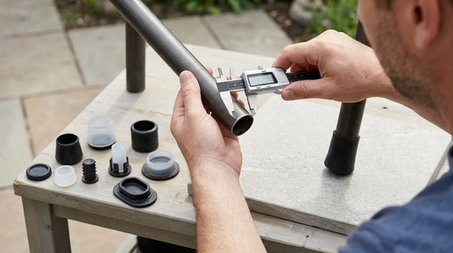
Measure each foot before ordering. A small cap can split or slide off. An oversized pad may wobble or collect dirt. For a tubular metal leg, match the cap to the tube’s outside diameter. For a flat leg, choose an adhesive protector with enough contact area and an adhesive rated for outdoor use. On a slippery floor, prioritize stability. For chairs that move often, choose a glide made for that surface.
After installation, test one chair on a clean, inconspicuous area. Move it gently and check that the protector stays in place, the chair remains stable, and the surface shows no new marks. Replace protectors when they crack, loosen, wear thin, or trap debris.
Move and Arrange Furniture Safely
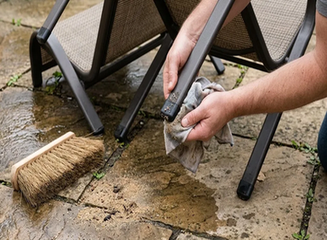
Even a suitable glide can scratch when grit gets dragged across the patio. Sweep the area and wipe chair feet before rearranging furniture. Lift a chair or table across paver joints and rough transitions. Get help with heavy pieces or use a furniture-moving aid rated for the surface. Keep a loaded table level as you move it.
Leave a clear area behind frequently used chairs so they do not catch on planters, thresholds, or uneven joints. Around a grill or patio kitchen, leave room to pull chairs back and keep them clear of fixtures.
Keep Dirt and Moisture from Causing More Damage
Sweep the patio regularly. After windy or rainy weather, remove grit from beneath furniture feet. Clean protectors as their care instructions direct and dry them before refitting. Grit between a pad and the floor can scratch the surface, and moisture can loosen some adhesives.
For furniture care, see Joye Leisure’s garden furniture cleaning guide by material. Follow the care instructions for your product and finish.
For pavers, use a cleaner intended for the material and follow its label. Belgard recommends testing a cleaning solution on a small, inconspicuous area. Its care guidance distinguishes concrete and porcelain pavers. Check the patio maker’s instructions before using a strong household cleaner, abrasive brush, or pressure washer.
What to Do if Your Patio Is Already Scratched
Clean the area gently to see whether the mark is dirt, a scuff, or finish damage. Identify the surface before scrubbing. A manufacturer’s recommended cleaner may remove a scuff. A gouge in wood, chipped tile, or damaged paver may need a material-specific repair.
Check the patio’s care guide or ask the installer before using solvents, acids, sealers, or a pressure washer. Belgard advises checking cleaner compatibility and testing a small area before treating pavers. After addressing the mark, repair or replace the furniture foot that caused it.
Quick Checklist for Scratch-Free Patio Furniture
Inspect every furniture foot for missing, rough, loose, or damaged parts.
Remove grit from feet and from the patio before moving furniture.
Match outdoor leg caps or glides to the floor material and furniture weight.
Test a new protector on a discreet area and check stability.
Lift furniture over joints and uneven transitions when possible.
Replace worn or loose protectors, and follow the patio maker’s cleaning guidance.
Inspect the furniture feet regularly and replace worn glides. If you are choosing a new set, Joye Leisure’s outdoor furniture selection guide covers material, comfort, and maintenance.