
What is the best material for an outdoor grill
Deciding on the best material for your outdoor grill can be difficult. While shopping for grills in stores and on the internet, you will find that there are many different types such as stainless steel grills, cast iron grills, porcelain coated grills, and many more. Each of these different types of grills has their own characteristics that they claim to have over the other types. They claim to have better heat retention, to be more rust resistant, and to be easier to clean, just to name a few.
If you enjoy grilling from time to time or you are a backyard aficionado, the grill material greatly affects taste, performance and grill life. In the following article we want to inform you thoroughly and support you in choosing the right material for your grilling style.
Why the Material of Your Outdoor Grill Matters
Your grill sits outside through rain, snow, intense sun, and temperature swings. The material determines how well it handles weather, how evenly it cooks, and how much maintenance it needs.
You might pay less for a cheap grill at first, but it is probably going to be one of those grills that you have to replace in 2 or 3 years. Instead of that, if you pay a little more for the right material for an outdoor grill, you will have it for years and it will perform perfectly. The material of a good quality grill is one of the biggest factors for serious grillers when it comes to their satisfaction with it.
Common Materials Used in Outdoor Grills
Stainless Steel: The Most Popular Material for BBQ Grills Modern stainless steel grills are far more superior than their predecessors. Among the most popular grills available in the market today, those made with higher nickel content such as the 304 grade stainless steel are the most resistant to rust. They heat up quickly and are relatively easy to clean and maintain.
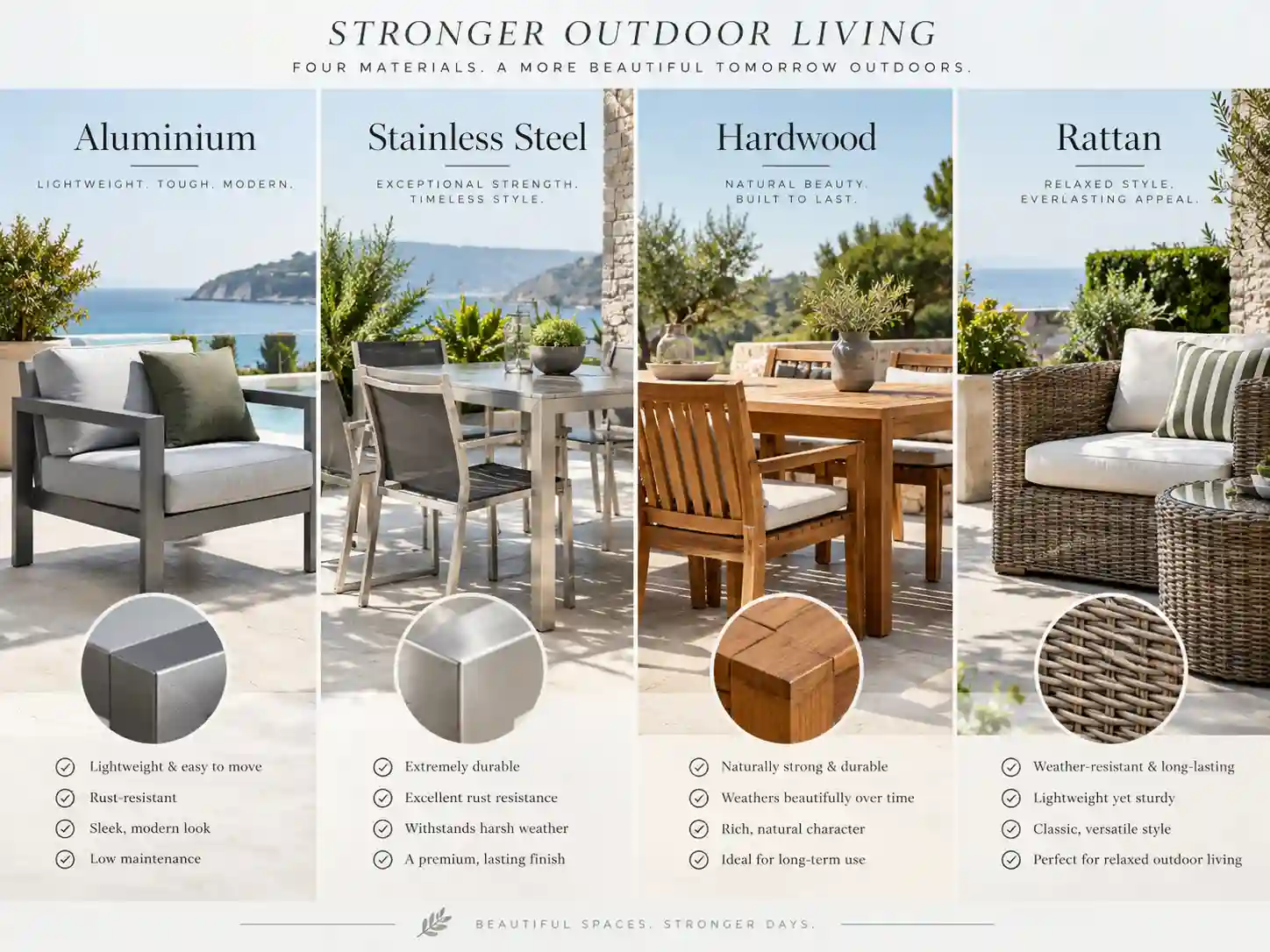
Stainless steel furniture comes in different grades. The lowest quality stainless steel can discolour or even rust if left outside in coastal areas with high levels of salt in the atmosphere. A lot of homeowners choose stainless steel for outdoor patios as it looks really great and is modern.
Cast Iron: Heat retention is what cast iron does best. It gets hot, and stays hot, perfect for searing steaks as well as keeping food warm. Many traditional charcoal grills are fitted with cast iron grates because of the perfect grilling marks they produce and the extra flavor they bring.
Porcelain-Enameled Steel: This material features a glass-like coating over steel. It offers good rust resistance and easy cleaning. Many mid-range grills are made from porcelain-enameled steel as it provides good heat distribution due to the coating. Charcoal and gas models are typical.
Porcelain can chip in places if using metal tools or very harsh cleaning products. Once chipped, it can develop rust due to moisture underneath the chipped area.
Carbon Steel: Carbon Steel is another very popular material for flat-top grills. Less commonly talked about than Cast Iron or Stainless Steel, it does have its advantages, making it a great balance of the two. It is certainly lighter than Cast Iron for example, yet holds heat well too. You will see many high-end grills on the market made from Carbon Steel for example. This grill grates develop a natural seasoning just like Cast Iron grates.
Comparison of Outdoor Grill Materials
| Material | Heat Retention | Rust Resistance | Weight | Maintenance | Best For | Lifespan |
|---|---|---|---|---|---|---|
| Stainless Steel | Good | Excellent | Medium | Low | All-purpose use | 7–15 years |
| Cast Iron | Excellent | Poor | Heavy | High | Searing & charcoal grilling | 10–20+ years |
| Porcelain-Enameled | Good | Very Good | Medium | Medium | Easy cleaning | 5–10 years |
| Carbon Steel | Very Good | Medium | Medium | Medium | Flat-top & high-heat cooking | 8–15 years |
Factors to Consider When Choosing Material
Exposure to climate and weather: Exposure to salt air from the ocean can rapidly damage lower grades of stainless steel. The higher the humidity and the more frequent the rain, the greater the need for rust resistance. For example, individuals living in harsh weather locations opt for higher grades of stainless or go with cast iron that is regularly maintained.
Cooking Style: A weekend warrior who is basically grilling burgers and chicken could probably get by with stainless steel. But if you are a serious cook who sears steaks at high heat or cooks low and slow then you will likely want cast iron components to get the best performance out of them.
Maintenance Tolerance: Your Tolerance for Cleaning and Maintenance. Be honest with yourself. If you hate cleaning and maintaining things, then choose a material that has less cleaning and maintenance required. This is true for many busy families. Many choose stainless steel or porcelain for that reason.
Cost of a budget option vs. Long Term Value: A $300 grill may cost a bit to start but are typically made with better materials and last more than 2-3 years as opposed to other grills on the market. In the long run you will save money by not having to constantly replace a sub par grill.
Real-World Performance Insights
People who use their outdoor grill several times a week tend to notice differences fast. One backyard cook in Texas mentioned his old porcelain grill started chipping after two years of heavy use. Switching to a higher-grade stainless model with thick cast iron grates made a noticeable difference in both cooking results and durability.
When it’s cold outside, a colder climate needs more heat retention. Cast iron cookware is ideal because it holds the heat so well. In very hot, sunny countries stainless steel is preferred because it does not conduct heat to the outside surface.
How to Get the Most Out of Any Outdoor Grill Material
No matter the material chosen, good care makes a huge difference.
-
Cover your grill when not in use
-
Clean grates while they’re still warm
-
Check for rust spots regularly
-
Season cast iron surfaces when needed
-
Store accessories indoors during winter
At Joye Leisure we have many years of experience designing and manufacturing charcoal and gas grills for the outdoor cooking market. As such we have a wealth of knowledge on the different materials used to manufacture outdoor grills and how they perform in different conditions and over time. Our designs are a culmination of the best qualities of different materials, for example using stainless steel for the body of the grill, and cast iron for the grates. We pay close attention to all the details that make for a great outdoor cooking experience, such as proper ventilation, strong and durable construction, and the use of the best components to ensure that they can withstand season after season of use. As we receive feedback from our customers from all corners of the globe, we continue to design and improve our range of outdoor grills.
Conclusion
Unfortunately there is no ‘one size fits all’ solution to finding the right material for an outdoor grill. Essentially it will come down to your individual circumstances, including the local climate, your cooking style and how much maintenance you are prepared to carry out. While stainless steel offers a versatile solution for most people, those that are prepared to offer cast iron the maintenance it deserves are rewarded with some of the best cooking possible from an outdoor grill. By finding a material that really corresponds to your circumstances, you can end up with an outdoor grill that you use for years to come as opposed to having to replace every few seasons.
FAQs
What is the best material for an outdoor grill in a rainy climate?
The best grills for use in a rainy climate are made of higher-grade stainless steel or have excellent porcelain-enameled coating. Even the best grills can suffer in the rain, so be sure to purchase a great cover and place your grill on a slight riser to keep it dry.
Grills made of Cast Iron or Stainless Steel?
Is cast iron better than stainless steel for an outdoor grill? In terms of retaining heat, i.e. in terms of searing, cast iron is clearly superior to stainless steel. On the other hand, the stainless steel is relatively easy to clean and not susceptible to rust like cast iron is. There are of course also grills that are made of a combination of both Cast Iron and Stainless Steel.
How long will a good outdoor grill last?
A quality grill, that is looked after properly, should last between 7 and 15 years. Better quality grills are generally made with better materials and they are constructed with thicker components which enable them to last longer.
Does the material of the food material make a difference to the flavor when grilling outdoors?
Yes. The better sear and more flavor that can be got from Cast Iron and Seasoned Carbon Steel compared to thinner stainless steel.
Are porcelain-coated outdoor grills worth the investment?
They are in a middle ground of price and really are quite good if you want easy cleaning. Be careful not to chip the coating as that will quickly lead to rust.