
How Has Technology Changed the Evolution of Outdoor Grill Safety?
Backyard grilling once carried notable risks. In past decades, it typically featured weak metal stands and sudden flame bursts that could damage patios. Now, advanced design approaches have transformed the basic barbecue into a reliable, protected device. For a supplier leading in these safety advances, JoyeLeisure holds strong reputation in production circles. From 2002, they have improved outdoor items with emphasis on strength and user confidence. Located in Hangzhou, their large facility manages all stages from research to final inspections. They adhere to EN581 or SGS norms not merely for compliance, but because faulty grills lose user trust. With more than 20 years in the field, their experts assist worldwide buyers and retail outlets in obtaining durable goods.
Shifting Standards in Modern Outdoor Cooking Safety
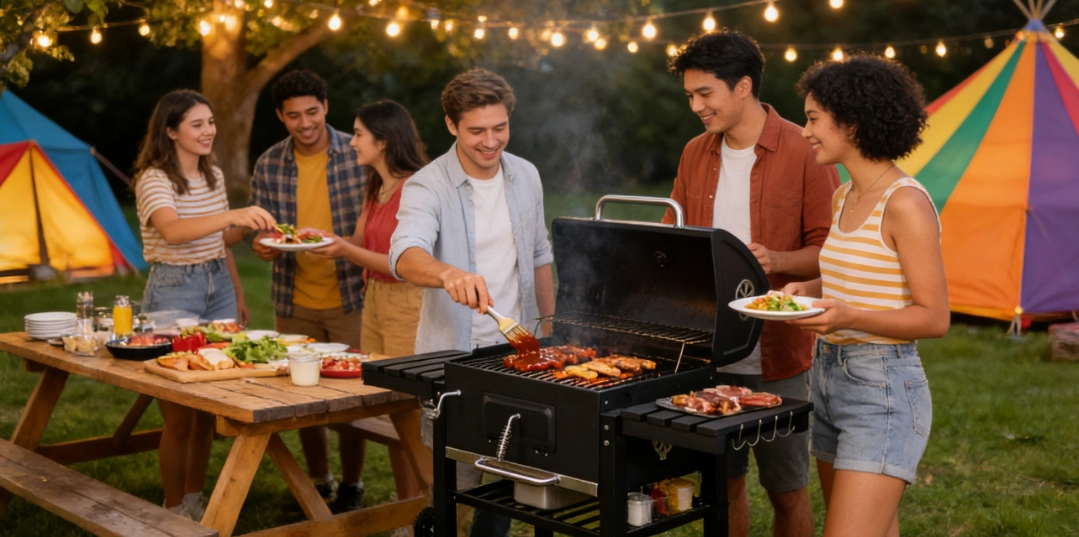
Requirements for grill safety have grown stricter in recent years. Traditional models depended on simple balance, whereas current ones employ rigorous evaluations to avoid typical garden mishaps. Producers now stress framework strength and substance protection to satisfy demands in regions such as Europe and North America.
Historical Fire Risks
Shaky supports and slim metal casings frequently caused overturns or thermal distortion. These issues allowed burning coals to scatter onto dry turf or timber decks. Consequently, such designs heightened fire dangers in outdoor settings.
Modern Engineering Solutions
Today’s grills incorporate robotic welding and precise tube forming to build frames that remain firm under substantial weights. This accuracy eliminates manual mistakes that once produced fragile connections. As a result, overall stability improves markedly.
Consumer Safety Expectations
Buyers seek approvals like EN1860 or EN581 as essential quality markers. Achieving these involves passing impact simulations and weight endurance checks. Therefore, certified products assure users of dependable performance.
Enhancing Stability with Advanced Structural Engineering
An unsteady grill poses a potential ignition threat. Contemporary framework design lowers the balance point and strengthens load-focused areas. Thus, even during crowded gatherings, if contact occurs, the structure holds steady.
Heavy Duty Frames
Corrosion-proof aluminum mixes or premium stainless steel form bases that resist weakening from oxidation. A robust frame serves as primary safeguard against breakdown. This choice ensures long-term reliability in varied conditions.
Reinforced Leg Support
Recent patterns often feature diagonal bracing or broader bases. These elements spread fuel and meal loads uniformly over the terrain. Consequently, the unit avoids tipping under normal pressures.
Anti-Tip Design Features
Current rules demand steadiness on mildly irregular ground. Designers determine precise equilibrium to avert topples in routine use. Such features enhance safety without complicating operation.
Managing Heat Levels Through Smart Material Selection
Regulating heat flow in a grill is crucial to avoid scalds. Innovations have brought substances that confine warmth to cooking zones while safeguarding outer sections for contact. This mirrors insulation in thermal containers, adapted for flame environments.
Heat Resistant Coatings
Static powder application yields surfaces enduring scratches and elevated warmth. This green method bonds superior to conventional coatings and shields against solar wear. As such, it prolongs the grill’s functional life.
Insulated Handle Grips
Grips now use durable synthetic polymers or processed timber that block heat transfer. This lets users inspect meals without constant protective gear. Hence, handling becomes more convenient and secure.
Dual Layer Fireboxes
Contemporary combustion chambers adopt layered construction. The intervening space insulates, cooling the external layer and minimizing unintended burn risks. This design promotes safer interaction during use.
Revolutionizing Airflow Control for Safer Combustion
Erratic, dancing fires may impress in films, but they endanger gardens. Accurate ventilation management permits temperature regulation within narrow ranges, curbing grease blazes that plagued earlier models. Improved air handling also cuts fuel loss and yields purer burning.
Precision Vent Systems
Lateral and upper openings enable fine oxygen tweaks. One can suppress bursts promptly by shutting vents to limit air supply. This control fosters predictable cooking outcomes.
Smoke Reduction Technology
Directing flow through designated paths achieves low-emission burning. It averts eye-irritating haze and creates a safer ambiance for attendees. Moreover, it enhances overall user comfort.
Controlled Oxygen Intake
Enclosed chambers direct air entry to intended spots. This avoids “draft-induced” surges from breezes. Therefore, combustion stays manageable and efficient.
Integrating Safety into Professional Grade Charcoal Units
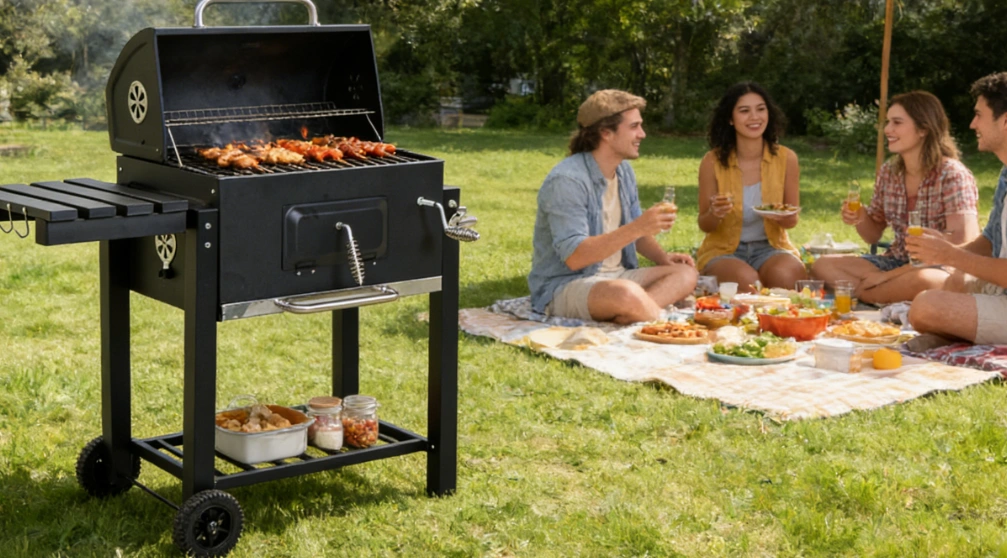
Traditional charcoal cooking has gained technological upgrades. The Amazon Best Selling Charcoal Barbecue Grill illustrates how age-old fuel integrates with current protections. These devices endure briquette intensity while confining residues.
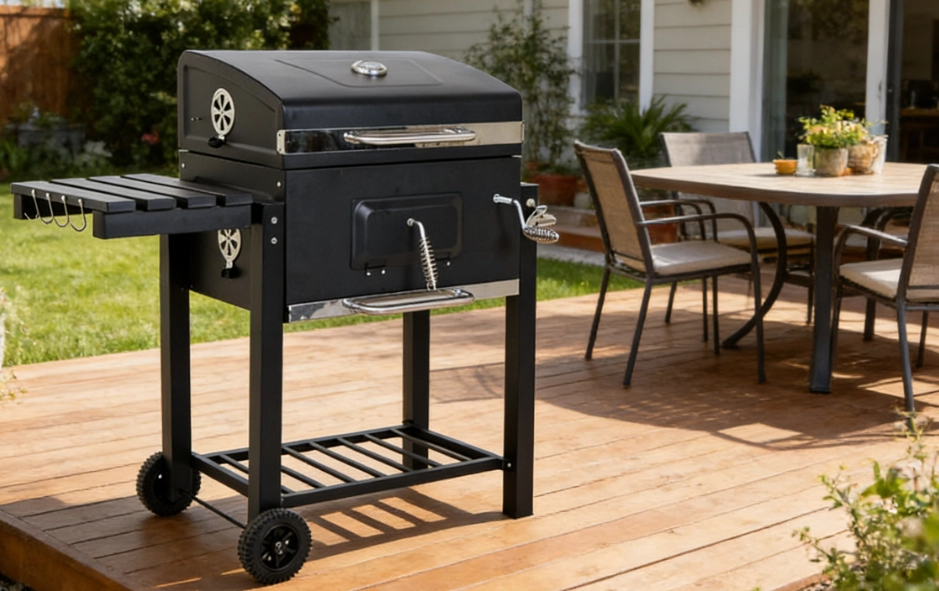
Amazon Best Selling Charcoal Barbecue Grill
This model prioritizes firm build and simple setup without expert implements. It merges authentic smoke taste with factory-level safety norms. Thus, it appeals to both enthusiasts and cautious users.
Secure Latching Mechanisms
Superior grills employ robust fasteners to secure covers amid sessions. This blocks escaping heat or sparks during gusts. As a result, operational hazards decrease significantly.
Mess Free Ash Management
Detachable fuel holders and residue collectors simplify waste removal sans hot contact. They lessen spark scatter risks in post-use phases. This facilitates routine upkeep effectively.
Simplifying Maintenance for Long Term User Protection
Neglected grills invite dangers. Fat accumulation triggers most surprise ignitions. Advances have streamlined upkeep, motivating owners to sustain peak condition year-round.
Easy Clean Surfaces
Stainless counters and enameled grids permit fat removal via wet fabric and gentle cleanser. No extended abrasion is necessary for functionality. Consequently, maintenance stays straightforward.
Removable Fuel Trays
Updated layouts enable tray extraction for thorough washing. This prevents residue buildup in inaccessible areas. Hence, fire prevention improves through regular care.
Corrosion Resistant Parts
Elements like 304 stainless steel in basins and spigots withstand moist atmospheres. They avoid jamming or seepage over periods, preserving system wholeness. This durability supports enduring safety.
Why Choose JoyeLeisure for Your Professional Grilling Needs
Aligning with JoyeLeisure delivers beyond merchandise; it includes two decades of logistics knowledge. Daily output of five 40-foot units handles bulk wholesale without quality lapses. They extend one-year coverage on iron items and two on aluminum, supported by rapid response teams.
Global Quality Compliance
Items receive full visual and operational reviews prior to dispatch. Routine stress and capacity trials confirm practical dependability. These measures uphold international benchmarks consistently.
Innovative Product Design
Research staff propose fresh, stylish concepts aligning with European and North American preferences. This refreshes stock and attracts contemporary buyers. Innovation drives market relevance.
Comprehensive Client Support
Services span gratis setup guides to regional safeguards for distributors, fostering expansion. Initial shipments include extras for swift issue resolution. This builds strong partnerships.
FAQ
Q1: Does the Amazon Best Selling Charcoal Barbecue Grill require professional assembly?
A: No, professional tools are unnecessary. The supplied kit and guide enable simple completion by anyone.
Q2: What is the benefit of powder coating on an outdoor grill?
A: This green method offers 50% stronger bonding than standard paint, resisting abrasions and ultraviolet harm.
Q3: Are these grills compliant with European safety standards?
A: Yes, they meet EN581 for outdoor fixtures and further rules like the EU General Product Safety Regulation.
Q4: How does the company handle quality issues after a shipment arrives?
A: A dedicated service group addresses concerns. Replacements cover damaged components, and they assume costs for material errors including returns and reworks.
Q5: Can I get a customized grill for my own brand?
A: Yes. OEM/ODM options include custom labels, emblem etching, and mold retention for up to 10 years.