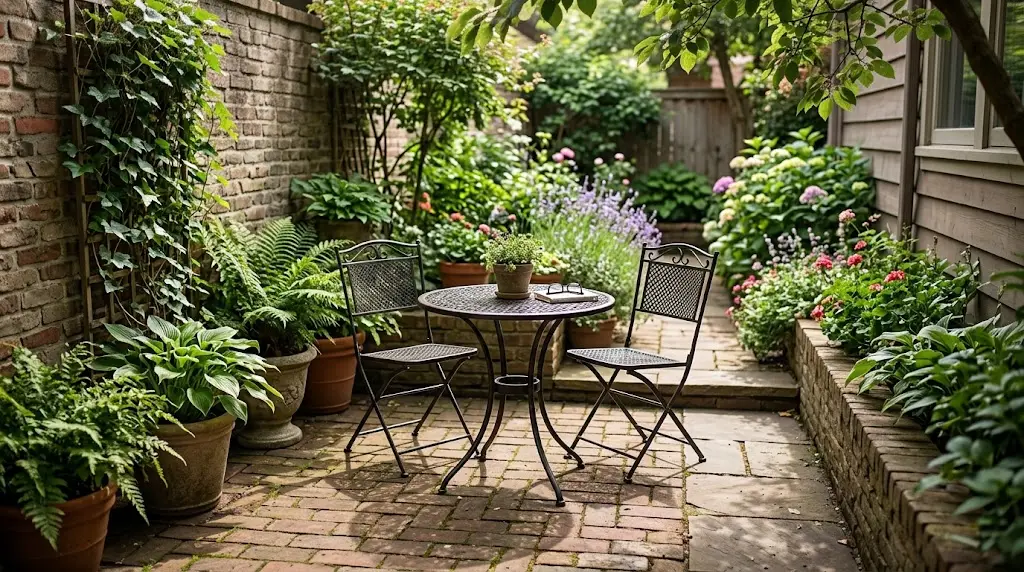

How to Clean Garden Furniture by Material
Clean garden furniture according to its material, finish, and care label. Pollen, soil, food marks, and damp storage affect frames, woven panels, tables, and cushions differently.
Start with identification. Remove loose dirt, apply the approved cleaner, rinse where permitted, and let every part dry. This sequence follows the care limits for each component.
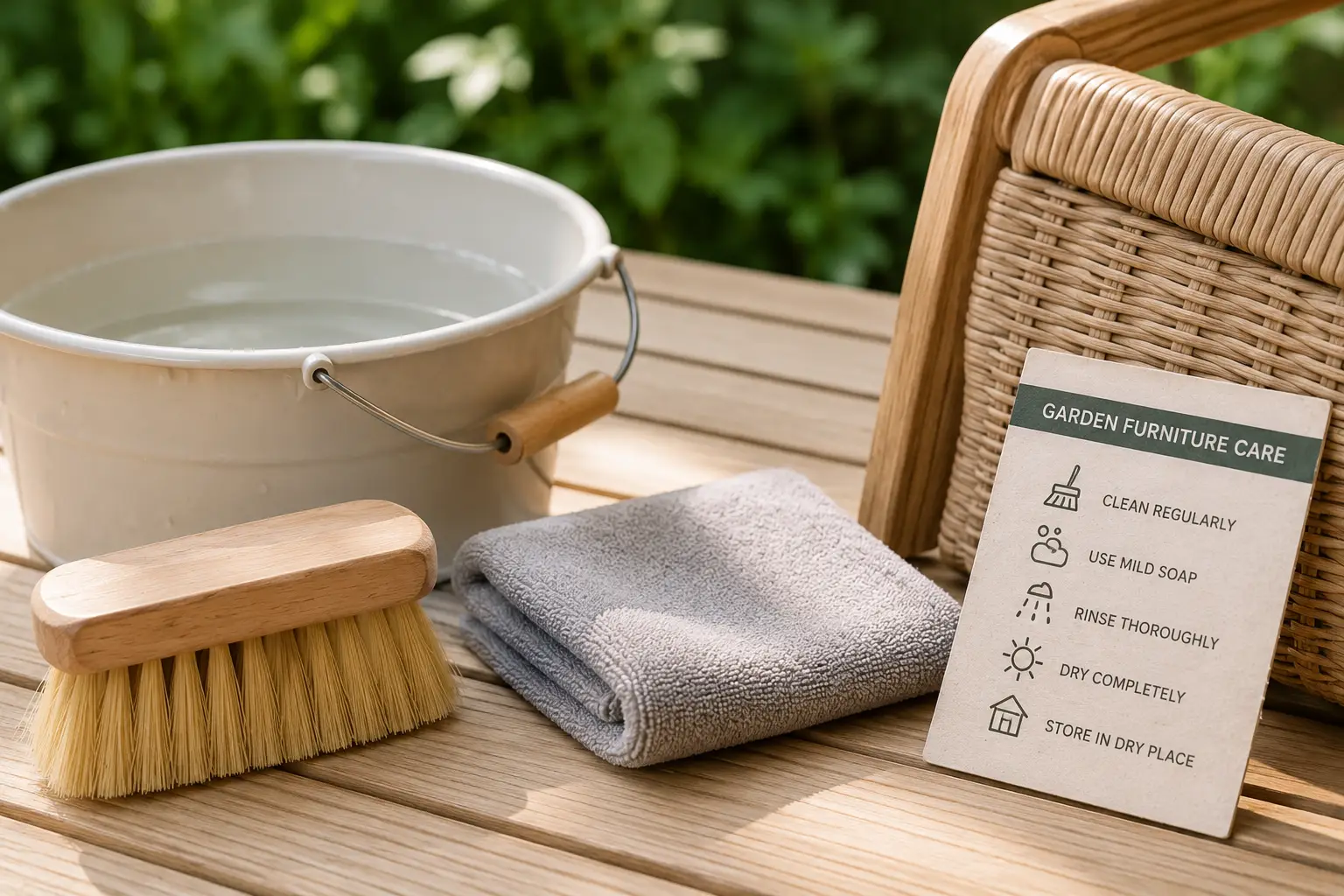
Check the Garden Furniture Material and Care Label First
A garden chair can combine an aluminium frame, synthetic wicker, outdoor fabric, and quick-drying foam. Each component may carry a different instruction. Read the product label and current manufacturer guidance before adding water or cleaner. Check whether the cushion cover is removable and how the filling should dry. Joye Leisure’s outdoor furniture materials and categories provide context for common constructions.
Pay close attention to woven furniture. Natural rattan and synthetic PE or HDPE rattan need separate care decisions. Confirm the weave type, then test the approved cleaner on a hidden area.
|
Material or component |
Routine method where approved |
Check before cleaning |
|
Synthetic rattan or wicker |
Soft brush, mild soapy water, gentle rinse |
Weave type, loose strands, frame material |
|
Wood |
Damp cloth or soft brush, cleaning with the grain |
Wood species, paint, stain, oil, or sealer |
|
Coated metal or aluminium |
Soft cloth and mild soapy water |
Coating chips, oxidation, rust, exposed metal |
|
Plastic or rope |
Soft cloth or brush with a surface-safe cleaner |
Resin type, rope fibre, colourfastness |
|
Cushions and outdoor fabric |
Blot, spot clean, or wash as the label directs |
Removable cover, water temperature, filling, drying method |
What You Need to Clean Garden Furniture
Prepare a soft brush, clean cloths, a bucket, and a vacuum with an upholstery tool. Use clean water and the mild cleaner named in the product instructions. Keep a dry towel nearby.
The cleaner label sets the handling rules. Wear the listed protection and work in a shaded, ventilated area.
Basic Steps for Cleaning Garden Furniture
Use this sequence when the product instructions allow mild soap and water:
- Move cushions, covers, and removable accessories to a dry area.
- Brush or vacuum loose grit before adding water.
- Mix and apply the approved cleaner as its label directs.
- Work gently around seams, fasteners, joints, and woven areas.
- Rinse with clean water where the product instructions permit rinsing.
- Wipe away standing water and let every component dry fully.
Watch the wash water. Grit carried in dirty water can mark glossy plastic or coated metal, so replace the water when it becomes dirty.
How to Clean Different Garden Furniture Materials
The material controls the tool, moisture level, and drying method. Treat each component of a mixed-material set separately.
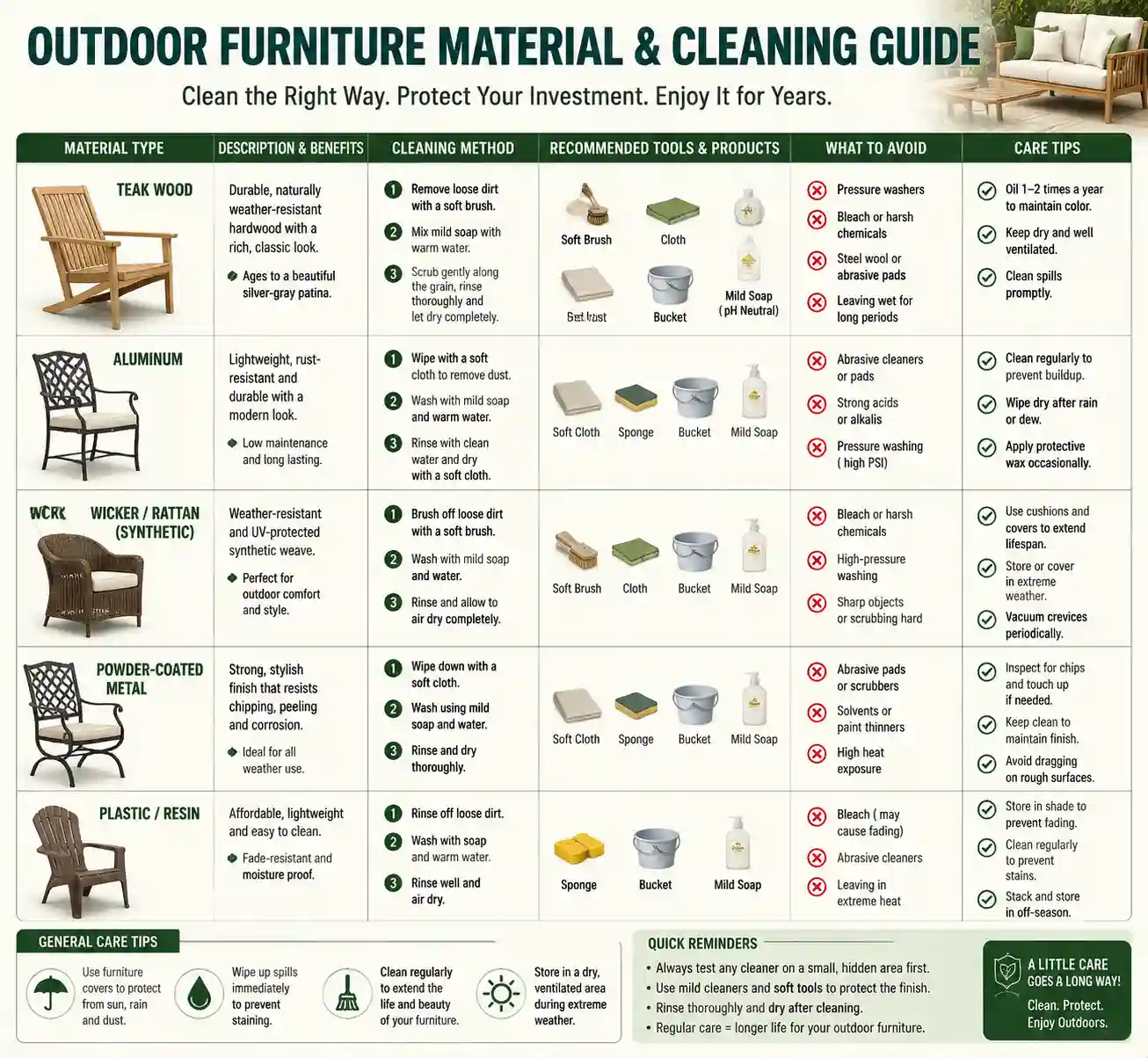
How to Clean Rattan and Wicker Garden Furniture
For synthetic wicker, use a dry, soft brush to lift dust from the weave. Apply mild soapy water with a cloth or soft brush when the instructions allow it. Keep pressure light around attachment points. Rinse only where permitted. Dry the weave and frame.
Natural wicker can absorb moisture. Follow its care instructions before wet cleaning. Cracked weave and loose strands need product-specific guidance.
Joye Leisure’s PE wicker furniture category shows the synthetic construction covered by this distinction. The supplied product material recommends a cover or winter storage for PE rattan furniture.
How to Clean Wooden Garden Furniture
Identify the wood and its finish. Paint, stain, oil, sealer, and unfinished wood require compatible products. Remove grit, then work with the grain. Use the amount of water approved by the maker. Clear residue from joints, end grain, and fastener holes.
Match any oil or sealer to the wood species and existing finish. Peeling paint, split boards, soft areas, and loose joints require repair advice.
How to Clean Metal and Aluminium Garden Furniture
Metal furniture may have powder coating, paint, an anodised finish, or exposed stainless steel. Clean an intact finish with a soft cloth and approved mild cleaner. After rinsing, dry welds, fasteners, feet, and water traps. Check these small areas again. They can stay damp after broad surfaces feel dry.
White or dull marks can indicate oxidation; red-brown marks often indicate rust. Confirm the metal and coating before choosing a treatment. Deep corrosion, bubbling paint, and flaking coating call for inspection.
How to Clean Plastic and Rope Garden Furniture
Brush grit from plastic before wiping it with water and a surface-safe cleaner. Abrasive pads can scratch dark or glossy finishes. Test an approved stain treatment in a hidden spot before treating a larger area.
Dust can settle where rope strands cross. Brush along the construction, use the supplier-approved cleaner, and leave airflow around frame connections.
How to Clean Garden Furniture Cushions
The care label decides whether a cushion cover can be machine washed, hand washed, or spot cleaned. Vacuum before applying moisture. Blot fresh spills with an absorbent cloth. Apply the approved cleaner from the edge towards the centre. Rinse or extract residue as directed.
Drying includes the filling as well as the cover.
A cover may feel dry while foam holds moisture. Let air reach both sides and refit the cover after every layer feels dry. Damaged seams, degraded backing, persistent odour, and recurring mould need assessment.
How to Remove Algae, Mould, Stains, and Rust
Green Algae and Surface Mould
Algae develops on damp, shaded surfaces. Mould can develop on dirt held in fabric or weave. Move the item to a ventilated area and wear the listed protection. Remove loose growth with a material-approved method. Follow the treatment label for application, rinsing, and drying.
Vinegar, baking soda, bleach, and specialist treatments can affect colour, fibres, coatings, and wood. Check product approval before use. Keep cleaners separate. Recurring growth may indicate damp storage or moisture inside a cushion.
Food Marks, Bird Droppings, Oxidation, and Rust
Deal with fresh food marks and bird droppings promptly. Where water is permitted, soften a hard deposit with a damp cloth and lift it with a soft tool. Joye Leisure’s source specifies a damp cloth and mild dish soap for grease on the matching outdoor-kitchen countertop family. Confirm the surface before using that method elsewhere.
Oxidation and rust treatments must match the base metal and finish. Structural rust, failed coating, split wood, loose weaving, and damaged seams require inspection. Cleaning resumes after that inspection.
Can You Pressure Wash Garden Furniture?
Use a pressure washer only when current product instructions approve the machine, attachment, pressure, distance, and spray direction. Approval applies to the exact setup. A strong jet can lift coating, roughen wood, drive water into joints, deform weave, or saturate upholstery. Those effects require further product-specific care.
Manual cleaning with a soft brush or cloth suits unknown finishes, woven parts, cushions, and damaged surfaces. For an approved pressure wash, follow the equipment manual and keep the spray moving. The Royal Horticultural Society’s furniture maintenance guidance provides further material-based information.
How Often Should You Clean Garden Furniture?
Set the schedule from the furniture’s condition and use. Brush away leaves and grit, and clean spills promptly. Plan a detailed clean when furniture returns to service and before seasonal storage. Exposure, food service, pets, and humidity affect the interval.
Shared and commercial spaces can keep a dated care record. Record stains, products used, cleaning dates, and follow-up work. Joye Leisure’s service and care support gives owners and project teams a route for product-related assistance.
Store Clean Garden Furniture Correctly
Let clean garden furniture dry before fitting a cover or moving it into storage. Keep airflow around cushions and woven sections. Follow the cover instructions.
Check fasteners, seams, coatings, and drainage points. Confirm that cushion covers and fillings feel dry.
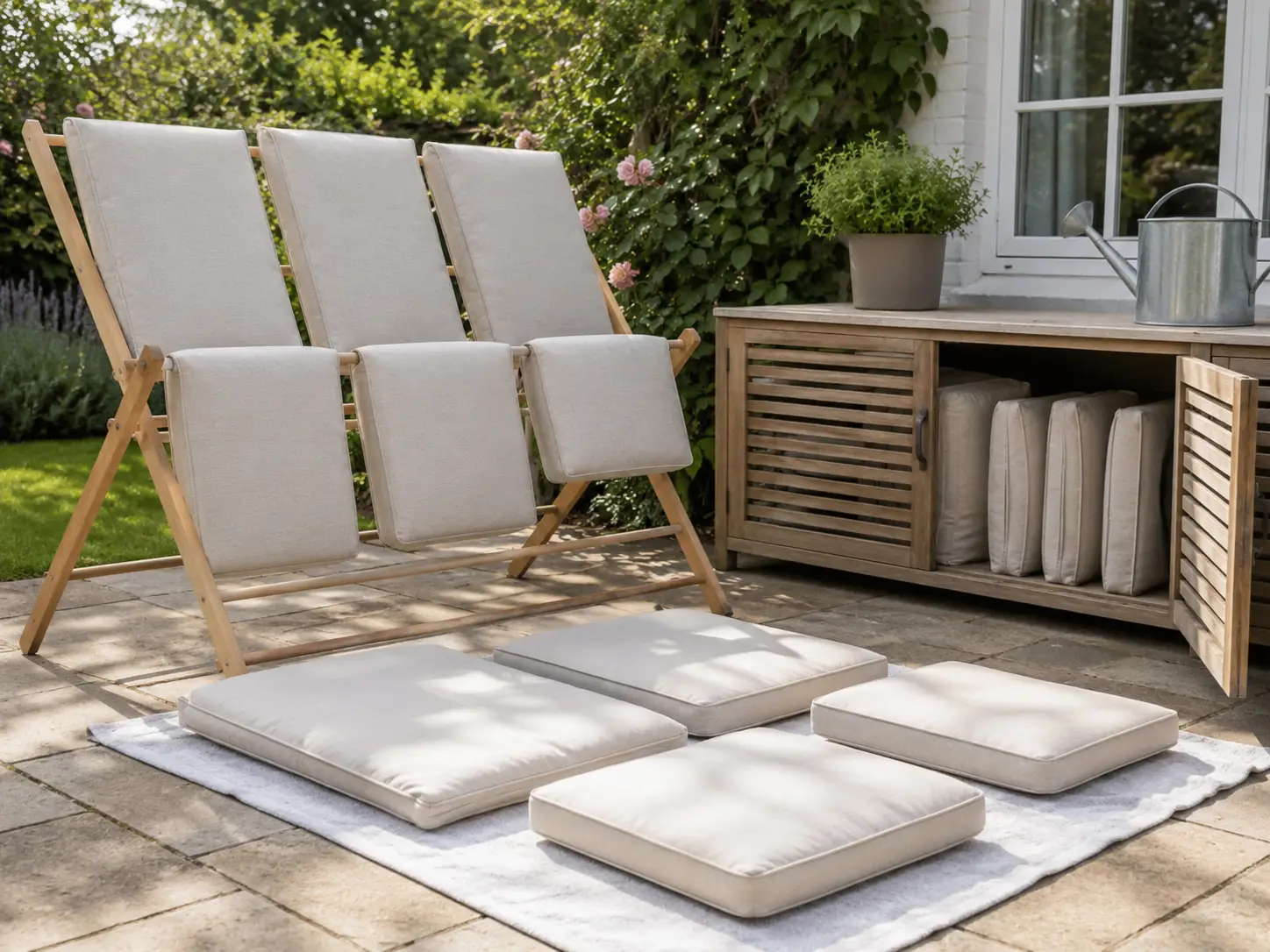
Keep Garden Furniture Clean With the Right Care Method
Material identification sets the cleaning method. Remove loose debris, follow current care instructions, rinse where permitted, and dry every component. Chemical treatments, pressure washers, oils, sealers, and rust products must match the material and finish.
Joye Leisure is operated by Joye Industrial and Trading (Hangzhou) Co Ltd. Its categories cover aluminium alloy, hardwood, stainless steel, engineering plastics, PE or HDPE rattan, outdoor fabrics, and quick-drying foam. Owners, retailers, and project buyers can ask for product-specific care instructions with the exact SKU and construction details.
FAQ
What Is the Best Way to Clean Garden Furniture?
Check the material and care label before choosing a cleaner. Remove loose dirt, use the approved mild cleaner with a soft tool, and rinse where permitted. Dry the frame, weave, fabric, and filling fully.
Check each component of mixed-material furniture. Frame instructions may differ from the cushion label.
Can I Use Vinegar or Baking Soda on Garden Furniture?
Use vinegar or baking soda only with maker approval for the material and finish. These products can affect colour, coatings, wood, and fibres. Test the approved method in a hidden area.
How Do I Remove Green Algae From Garden Furniture?
Identify the surface and remove loose growth in a ventilated area with a material-approved method. Apply an approved treatment and follow its label for protection, rinsing, and drying.
Keep cleaners separate. Recurring algae calls for an inspection of storage conditions and cushion moisture.
Can I Pressure Wash Garden Furniture?
Use a pressure washer when current product instructions approve the exact setup. Confirm the attachment, pressure, distance, and direction. Use a soft brush or cloth on unknown finishes, cushions, loose weave, and damaged surfaces.
How Often Should Garden Furniture Be Cleaned?
Clean spills promptly and remove leaves or grit during use. Schedule a detailed clean at seasonal setup and before storage. Exposure, humidity, food service, pets, and visible dirt determine the interval.