
How To Create The Perfect Garden Cooking Space
To create a practical garden cooking space, plan where you will cook, prepare food, and sit down to eat before choosing your garden furniture. Start with your usual guest numbers, measure the space with chairs pulled out, and leave a clear route between the kitchen door, preparation surface, and dining table.
The right setup should make an ordinary outdoor meal easy. A compact table beside a well-positioned cooking area may suit your household better than a large island that leaves little room for guests. Work through the layout first, then choose furniture, shade, and storage to fit.
1. Plan Your Outdoor Kitchen Layout Around Everyday Use
Map Out Cooking, Preparation, and Dining Zones
Sketch three areas: one for the cooking appliance, one for preparing and serving food, and one for eating. These can sit close together, provided their uses do not conflict.
Keep a dedicated preparation surface available while guests are seated. Otherwise, plates, ingredients, and utensils can take over the dining table just when everyone needs it. Include a suitable place to put cooked food without returning it to a surface used for raw ingredients.
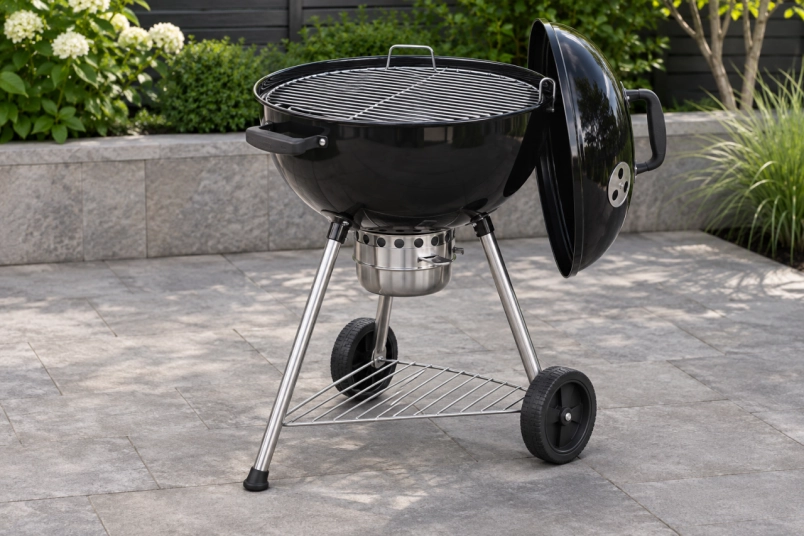
Choose the appliance location according to its installation instructions before arranging furniture around it. Its operating clearances and ventilation requirements determine how much of the remaining space you can use.
Check Routes, Chair Movement, and Access to the House
Walk the route you will take with a full tray. Can you open the kitchen door, reach the serving area, and approach the table without squeezing behind seated guests?
Measure garden furniture in use. Include pulled-out chairs, open storage lids, appliance doors, and any parasol base. Keep the route to drinks and extra plates away from the cook’s working position, so guests can help themselves without repeatedly crossing that space.
2. Choose Garden Furniture That Works for Outdoor Meals
Match the Dining Table and Chairs to Your Regular Guests
Choose outdoor dining furniture around the people who eat outside most often. If you usually dine as a small household, consider whether occasional extra seating would work better than a permanently oversized set.
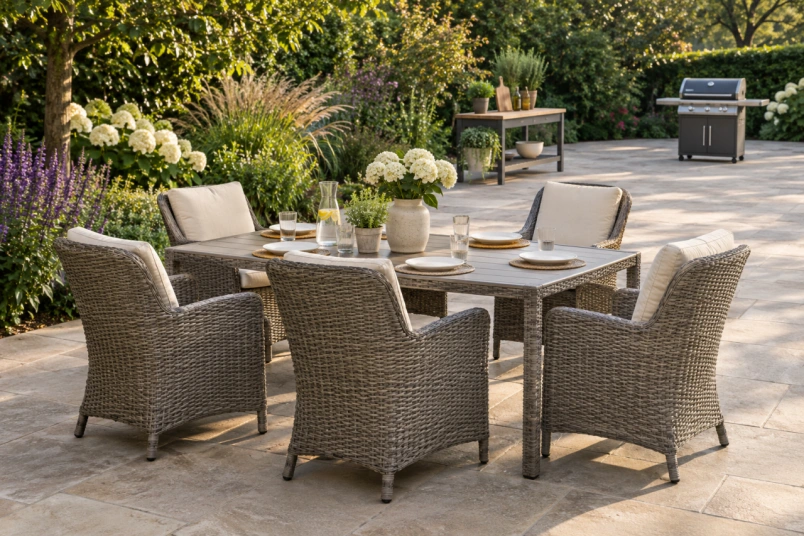
When comparing Joye’s outdoor furniture range, check the complete table-and-chair arrangement against your measurements. Look at usable tabletop space as well as the advertised seat count: serving dishes need somewhere to go.
Check that chair arms fit beneath the table and that the seat height feels comfortable with the tabletop. If possible, sit at the set and practise getting up while another chair remains occupied. These details matter more during a long meal than a matching finish alone.
Keep Dining Furniture and Lounge Seating in Their Right Roles
A sofa and coffee table can work well for drinks before dinner. For regular seated meals, assess whether the table height and seating position let people eat comfortably without leaning forward throughout the meal.
If you have room for both, place lounge seating beyond the dining area. If space is limited, prioritise the activity you do most often. A comfortable dining set can also accommodate conversation after the plates are cleared.
Use Flexible Furniture in a Small Garden Cooking Area
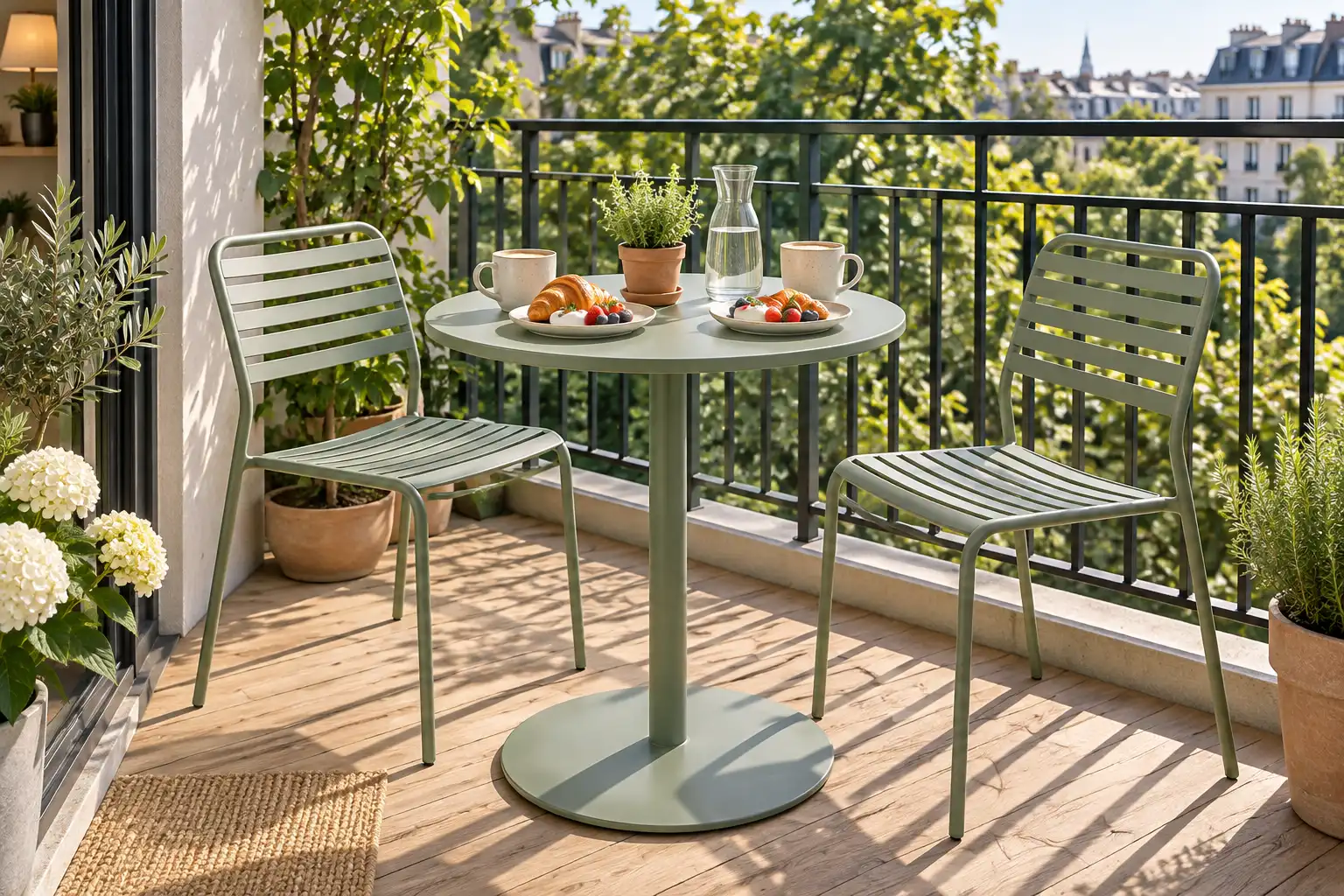
For a small garden cooking area, look for furniture that can be moved or stored when necessary. Folding chairs, stackable seating, or a compact table are options to investigate, depending on the products available.
Check folded dimensions and storage access before buying. Furniture that folds is only useful if you have somewhere convenient to put it. Likewise, test whether a bench can be accessed comfortably when the table is occupied; fitting neatly beneath a tabletop does not settle that question.
3. Compare Materials for Cleaning and Outdoor Exposure
Check Frames, Table Surfaces, and Woven Details
Choose garden furniture with the complete construction and care instructions in mind. A material name alone does not tell you how a finished piece will perform in your garden.
Use these questions when comparing options:
|
Furniture detail |
What to check before buying |
|
Metal frame |
Specified finish, care requirements, joint condition, and instructions for treating surface damage |
|
Wooden components |
Recommended cleaning and surface care, plus suitability for the intended exposure |
|
Woven seating |
Weave material, underlying frame, accessible cleaning areas, and drying instructions |
|
Tabletop |
Cleaning method, food-spill care, and restrictions on hot cookware |
|
Cushions |
Care label, removable-cover instructions, drying needs, and storage requirements |
For a cooking space, pay particular attention to food spills and the effort involved in cleaning corners or woven surfaces. Avoid assuming that an outdoor dining table can serve as a heat-resistant landing surface for pans or barbecue equipment.
Choose Cushions With a Practical Drying and Storage Plan
Before choosing thick cushions, decide where they will go after use. Check whether covers are removable, how they should be cleaned, and how much sheltered drying space you have.
Joye’s rattan furniture cleaning and protection guide discusses cushion storage and furniture covers. Use the care instructions supplied with your particular set when deciding what can remain outdoors. Plan storage large enough for the cushions without forcing them in while damp.
4. Add Serving Space and Storage Without Blocking the Cook
Place Serving Surfaces Where Guests Can Reach Them
A separate serving position gives guests access to drinks, napkins, and finished dishes while the cook continues working. Place it on the dining side of the layout, outside the appliance’s required clearances.
A side table or serving trolley may be useful here, but check its intended use and stability. If it has wheels, consider the surface it will travel over and whether it can be secured when parked. Keep ordinary garden furniture out of the role of a cooking worktop unless it is specifically designed for that purpose.
Plan Where Cushions, Covers, and Dining Accessories Will Go
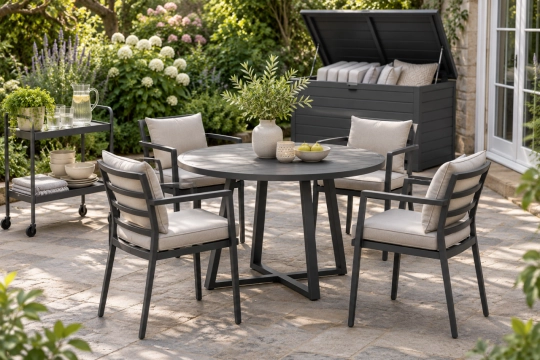
List what needs putting away: seat pads, covers, tableware, and any loose accessories. Then check the internal dimensions and access opening of your proposed storage.
Think through the end of a meal, too. Can you clear plates without moving chairs? Is there somewhere to dry a wet cover before folding it? Storage that supports these small jobs makes the whole area easier to use again tomorrow.
5. Plan Shade and Lighting Around the Dining Area
Shade the Table While Respecting Grill Instructions
Plan dining shade around where sunlight falls when you normally eat outside. Include the canopy, support pole, and base in your layout, and follow the shade product’s anchoring and weather instructions.
Assess the cooking appliance separately. For example, Weber’s Spirit grill safety guidance prohibits use under overhead combustible structures and specifies outdoor ventilation requirements. Follow the manual for your own appliance; a parasol or gazebo suitable for dining does not establish a suitable cooking location.
Light Food Preparation, Dining, and Walking Routes
Check the space after dark before choosing lights. The preparation surface needs useful illumination, while the dining area may suit softer light. Steps, thresholds, and the route back indoors should remain visible.
Position lights so your body does not cast a shadow over the surface where you prepare food. Select products intended for their installation conditions, and use a qualified professional for fixed electrical work as required locally. Keep cables away from walking routes and heat.
6. Test the Whole Setup Before You Buy
Try a Compact Layout and a Family Dining Layout
Use these as planning examples rather than fixed designs:
- Compact garden:Position the appliance as its manual requires, then test a small dining set with a separate serving surface. Check whether movable seating can be stored conveniently.
- Family dining area:Mark a larger table with every chair pulled out. Place preparation and serving surfaces so the cook and guests can move independently. Add lounge seating only if usable space remains.
Neither arrangement needs a built-in kitchen to function. Choose the amount of equipment around how you actually cook and how much space you can maintain.
Check the Furniture Footprint With Chairs Pulled Out
Mark the proposed garden furniture footprint on the ground with removable tape or another suitable marker. Use existing chairs to simulate occupied seats, then walk through a meal from preparation to clearing up.
Before ordering, confirm:
- The appliance’s installation and operating requirements can be met.
- Guests can sit down and leave the table comfortably.
- Doors, lids, and drawers open without obstruction.
- Shade supports leave walking routes clear.
- Cushions and covers have a suitable storage location.
- The furniture’s cleaning routine fits your habits.
A useful garden cooking space starts with these everyday checks. Once the layout works, choose the furniture finish and accessories that suit the garden.
For retailers and importers developing an outdoor living range, Joye’s product scope includes outdoor tables and seating, barbecue products, shade, and accessories, with OEM/ODM cooperation available. Contact Joye to discuss your furniture requirements and confirm suitable products for your intended market.
7. Frequently Asked Questions
What Garden Furniture Do You Need for an Outdoor Cooking Space?
Start with a dining table and comfortable chairs for your regular guests, then assess whether you need a separate serving surface. Add storage and shade according to the site. Keep preparation and hot-cookware requirements separate from ordinary dining furniture, and leave the appliance’s required operating space clear.
How Do You Furnish a Small Garden Cooking Area?
Measure the appliance’s required space first, then test a compact dining arrangement with the chairs pulled out. Consider folding or stackable seating if you can store it conveniently. Keep the route indoors clear and prioritise your usual meals before making room for occasional larger gatherings.
Can You Put a Barbecue Under a Parasol or Gazebo?
Check your barbecue’s manual before planning any overhead shelter. Some appliances prohibit use beneath combustible structures, and an open-sided canopy does not override that restriction. Position dining shade separately wherever necessary, and check the appliance’s ventilation and clearance instructions alongside the shade product’s installation requirements.
How Should You Store Outdoor Dining Cushions?
Follow the cushion care label for cleaning and drying, and let cushions dry fully before storing them. Choose a suitable dry location with enough room for their full size. Check them after wet weather and before longer storage periods rather than assuming an outdoor fabric needs no further care.