
How to Keep Patio Furniture From Blowing Away on Rooftop Terraces
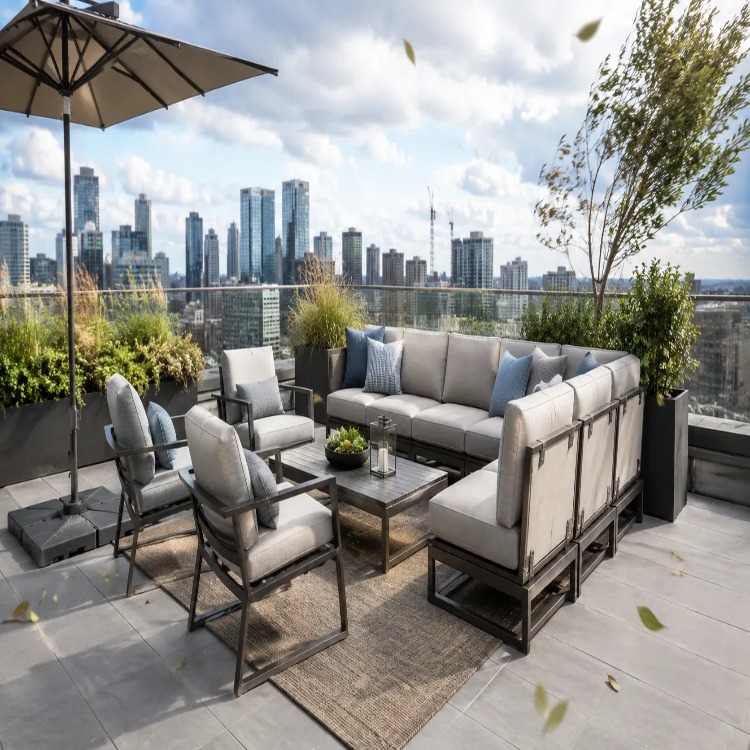
Keeping rooftop furniture in place is not just a matter of adding weight. You need to control sliding, tipping, and uplift. A practical plan combines low-profile furniture, reduced wind exposure, connected modules, approved ballast or anchors, and a clear high-wind routine. This is especially important on hotel, restaurant, apartment, and commercial terraces.
Why Does Rooftop Patio Furniture Move in Strong Wind?
Wind acts very differently around a roof compared to a sheltered garden. Roof corners, parapets, tall nearby buildings, and tight passages can easily speed up or twist airflow. Because of this, a chair that feels heavy on the ground might act completely different twelve floors up. In many cases, a heavy table stays put, but a small light ottoman slides away first.
Weight Is Only Part of the Answer
A seat with a tall, solid back catches a lot more wind than a chair with an open-weave design. Similarly, a narrow base tips over much faster than a wide one. Smooth floor tiles also lower friction. This means even a fairly heavy piece can easily slide across the deck.
Wind pressure goes up very fast as wind speed grows. In simple terms, when you double the wind speed, you can get about four times the wind force. That is why there is no single “safe wind speed” number unless you inspect the furniture size, the area’s wind exposure, and the setup itself.
Check Three Failure Modes
For every single piece of outdoor gear, ask yourself three questions:
Can it slide?
Can it tip over one side?
Can strong wind get under it and lift it up?
Looking at these three points gives you a better plan than just checking the item’s total weight. When you look through an outdoor furniture range, make sure to check frame shape, seat height, base width, and fixing points together.
How Should You Choose Wind-Resistant Patio Furniture?
The best patio furniture for windy rooftops usually has a low center of gravity, a broad footprint, and limited solid surface area. Yet very heavy pieces can increase roof loading and make emergency storage difficult. You need stability that still works in daily operation.
Favor Low, Open, and Connected Designs
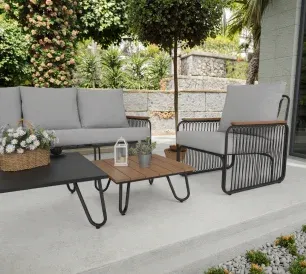
Low lounge chairs usually carry less risk of tipping than tall bar stools. Also, open frames or woven panels let the air pass right through them. Modular sofas work well, too, if you use strong connector clips between the parts.
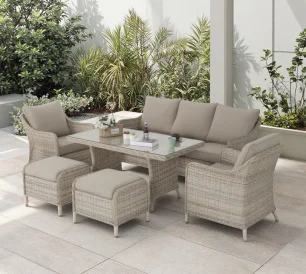
If you are choosing wicker items, check the metal frame underneath the weave. Aluminum frames with powder coating stop rust and remain easy to lift. Steel frames add weight, but they need good protective paint. Looking closely at a wicker furniture collection shows why frame strength, weave pattern, cushion setup, and seat layout must be planned together.
Ask for Useful Product Data
Before buying, ask the supplier for clear details: net weight, full dimensions, frame material, tube sizes, base width, build type, joint clips, anti-slip feet, and cushion strap options. A simple product photo cannot answer these points, but a full specification sheet can.
How Can You Secure Patio Furniture without Drilling?
Many property owners prefer non-invasive setup choices. Drilling holes can harm roof waterproofing or break building rules. Even so, avoiding drills does not mean skipping a safety check. Any weight you add must stop movement, avoid trip dangers, and spread out load safely.
Combine Ballast, Friction, and Connections
Hidden ballast or weighted bases add good down-force. Anti-slip pads stop furniture from sliding on smooth stone or tile floor. Strong connector clips hold sectional sofas together so they do not separate. Using all these ideas together brings better safety than using just one fix.
Never tie your seats to glass railings, thin drainpipes, screen walls, or other weak parts. Any permanent mounting plan must be checked by property owners and building workers first.
Plan for Severe Weather
No heavy weights or clips can take the place of a strong storm routine. Always move light chairs, bar stools, loose cushions, rain covers, and small gear indoors before a big storm hits. You can use cushion ties or hidden clips during normal days, but do not rely on them in violent storms. Give workers clear rules and a set storage space. A stormy night is a bad time to look for missing straps.
How Should You Arrange Furniture on a Windy Rooftop?
Good layout planning lowers risk even before you install any extra hardware. Watch where loose leaves, paper napkins, or light rubbish gather on the deck. These small clues often show where strong winds travel.
Avoid Edges and Wind Corridors
Keep light chairs away from open edges, roof corners, and tight walkways. Put your seating in protected spots near solid walls or approved wind screens. Keep all door exits, pathways, and water drains wide open.
Do not line up tall chairs in one long wall, because that wall catches a lot of wind force. Splitting seating into smaller groups makes them safer, easier to secure, and fast to move. Leave enough open space so workers can easily link, cover, or shift items when needed.
What Should Commercial Buyers Ask a Supplier?
Wind stability needs to be part of the original buying plan for hotel, restaurant, office, or rental projects. Always request clear technical drawings, real sample checks, safe packing detail, spare parts help, and product match guarantee. For large buying orders, test a real chair sample first. Sit on it, drag it, clip it, and check the bottom feet. This simple test shows small issues that standard sales pages hide.
Match the Product to the Site
Tell your supplier your roof height, floor material, layout plan, storage space, guest volume, and local weather patterns. A good supplier can then suggest lower frames, open seats, stronger clips, or smarter cushion setups. Visiting a comprehensive product center also helps commercial buyers compare seating, shading tools, and other patio items in one place. Final fixing choices still belong to your local site team and project engineers.
Why Joye Industrial and Trading (Hangzhou) Co., Ltd. Fits Rooftop Projects?
Rooftop projects need matched products, safe packing, accurate spec sheets, and lasting spare parts support. Joye Leisure has worked in outdoor living for more than 20 years and serves professional customers in over 45 countries. Its range covers wicker and open-frame furniture, shading, camping, beach, heating, and garden items, supporting mixed outdoor projects rather than a single purchase.
The company provides customized product development, complete package solutions, and order-specific spare parts such as cushions, screws, or slats. Reported capacity reaches five 40-foot containers per day, and its 1,200 m² garden-style showroom presents products in outdoor settings. For rooftop buyers, frame structure, layout, packing, and after-sales needs can be discussed as one connected project.
FAQ
Q1: How do you keep patio furniture from blowing away on a rooftop terrace?
A: Choose low-profile furniture, connect modules, add approved ballast, use anti-slip feet, and store light items before severe weather.
Q2: What is the best patio furniture for a windy rooftop?
A: Look for a broad base, low center of gravity, open back, suitable frame weight, and secure connection points.
Q3: Can patio furniture be anchored without drilling?
A: Yes. Ballast, high-friction pads, and connectors can help, but the method must suit the floor, roof loading, and building rules.
Q4: How heavy should patio furniture be in windy areas?
A: There is no universal minimum. Stability depends on weight, height, footprint, exposed area, floor friction, and local gusts.
Q5: Do outdoor furniture connector clips stop furniture from blowing away?
A: They reduce separation and help modules act as one group. They do not replace ballast, approved anchoring, or a severe-weather plan.