What Is the Most Sun-Resistant Outdoor Furniture?
UV-stabilized HDPE furniture is often the safest pick. It needs very little care. It works great for a patio that gets strong sun every day. Good powder-coated aluminum is another solid choice. It works well for frames, dining sets, and modular seats. If you like a woven look, pick synthetic PE or HDPE wicker. Put it over an aluminum frame.
But the frame material is only part of the story. Sunlight can fade fabric quickly. It can weaken cheap resin. It makes dark things hot. It can ruin a bad paint job long before the main frame breaks. The best outdoor patio furniture puts together a UV-resistant frame, lasting color, good fabric, proper water draining, and rust-proof hardware.
What Makes Outdoor Patio Furniture Sun Resistant?
Sun resistance covers several types of damage. A chair may stay strong but lose its bright color. A sofa frame might look okay while its wicker gets brittle. Cushions can fade even faster. Because of this, you need to check each part by itself.
UV Resistance and Color Retention
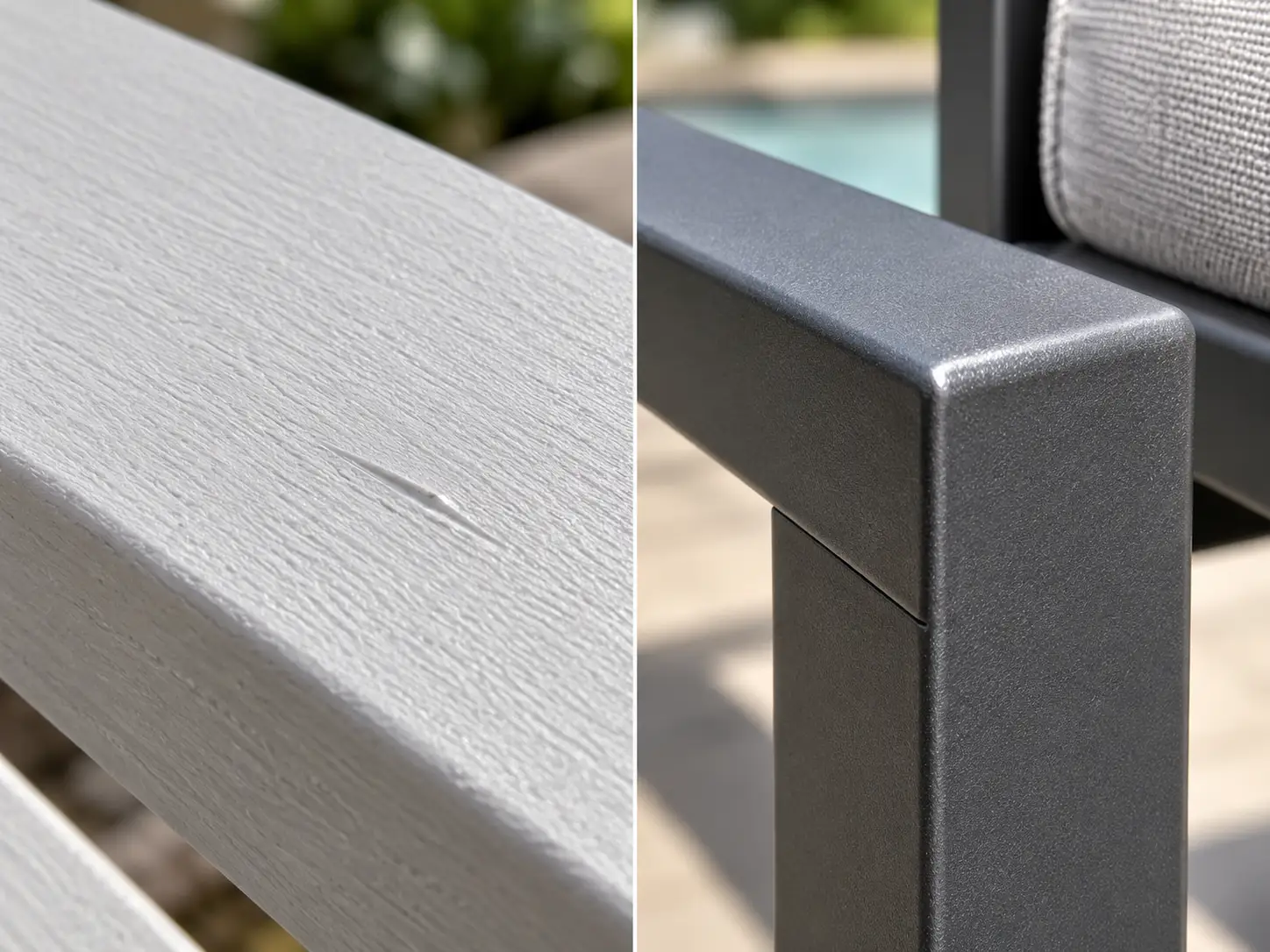
Ultraviolet rays break down chemical bonds in plastics, paint, and cloth. Over time, weak stuff might turn chalky, fade, crack, or get stiff. Good HDPE furniture has UV blockers and colors mixed right into the plastic. They do this before shaping the piece. The protection is not just a thin layer on the outside. So, a deep scratch will likely show the exact same color underneath.
Synthetic wicker needs this same kind of guard. Words like “plastic wicker” or “all-weather rattan” are not enough. Look for UV-stabilized PE or HDPE. It is best if they have test numbers or clear outdoor-use rules.
Heat, Expansion, and Surface Temperature
Strong sunshine also makes lots of heat. Dark metal, plastic, and wood can get too hot to touch. This happens even if the sun isn’t breaking the material. Daily heating and cooling make things swell and shrink. Bad joints might get loose. Thin paint can crack. Water trapped inside a hollow frame can make these problems much worse. Lighter colors mostly stay cooler. They also make slow fading harder to see.
Construction Quality Still Matters
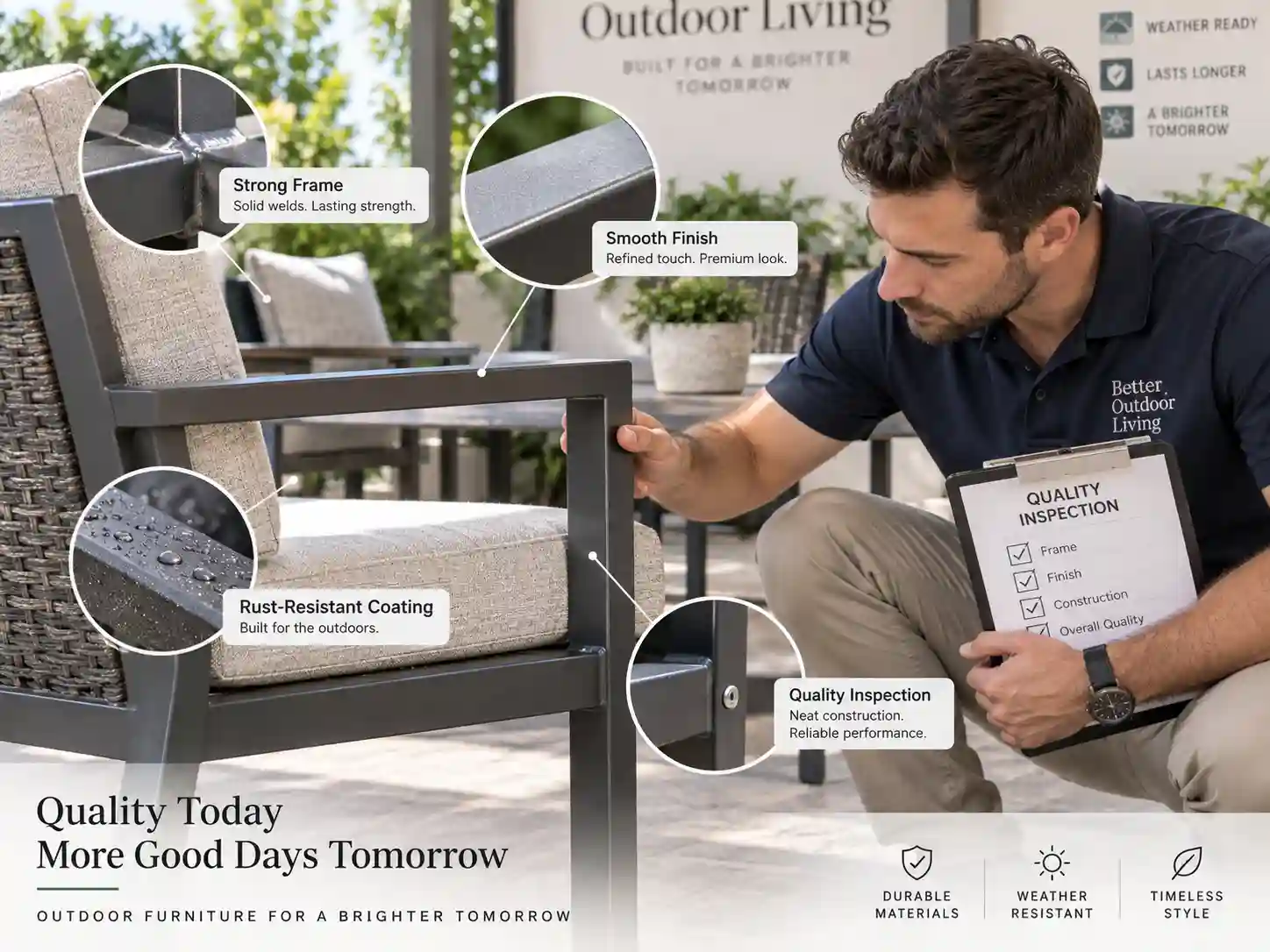
A tough material can still break. It fails if it has weak welds, normal steel screws, trapped water, or cheap indoor foam. On woven furniture, the hidden frame is often more important than the outside wicker. Sun resistance is just one part of being tough. UV rays, salt rust, heavy weight, wetness, and shipping bumps are all different dangers. A wider outdoor furniture guide can help you. It helps when you need to think about many of these problems at the same time.
Which Outdoor Furniture Material Performs Best in Full Sun?
No single material wins every test. HDPE keeps its color well and is easy to clean. Aluminum makes a great, handy frame. Synthetic wicker adds soft comfort and a nice feel. Teak gives a beautiful natural look and lasts a long time.
- UV-stabilized HDPE:Excellent sun resistance. Color and UV block go all the way through. But thick or dark pieces can get hot.
- Powder-coated aluminum:Very good. It is light and resists rust. But paint quality and chipping can change.
- Synthetic PE or HDPE wicker:Good to very good. It looks nice and cleans easily. But cheap resin can fade or snap.
- Teak:Structurally very good. Natural oils fight off water and rot. But the starting brown color changes in the sun.
- Powder-coated steel:Moderate to good. It is strong, steady, and cheap. But chips can let the frame rust.
UV-Stabilized HDPE for Low-Maintenance Exposure
HDPE is a top choice. It is great when you worry about fading, cracking, and lots of sun. It does not need paint for color. The color goes all the way through the plastic. It also fights off water, bugs, and rot. But quality still changes from brand to brand. Ask if UV blockers are mixed right into the plastic. Ask if the color is solid all the way through. Also ask what kind of screws they use. A heavy HDPE chair with stainless steel screws is very good. It is much better than a thin plastic chair that just says “weatherproof.” You can compare these items by looking at the frame, finish, wicker type, and cushions. Do not just look at how pretty they are.
Powder-Coated Aluminum for Frames and Dining Sets
Aluminum does not rust like normal steel. This makes it great for wet patios and beach towns. It is also very light. Homeowners or restaurant workers can easily move it around. The paint job needs a close look. Outdoor powder coating makes a safe shell. But the cleaning, paint thickness, baking, and handling all change how well it works. Chips near joints, edges, holes, and feet can quickly ruin a good frame.
A helpful test for this paint is 2,000 hours of QUV aging. You want a color change no worse than Grade 3. QUV testing is a fast way to compare things. It does not promise every chair will look brand new forever. The test result should match the exact paint and product details.
Synthetic PE Wicker over an Aluminum Frame
Synthetic wicker works great. It is nice when you want a softer look than hard plastic or bare metal. Good PE wicker fights mold, cold, and cracks. It is also very easy to wash with a hose. The hidden frame matters a lot. Aluminum is usually safer for wet or salty places. Powder-coated steel can work well in the right spot. But a tiny paint chip can let rust grow. This rust hides under the weave. Look very closely at the corners and joints. Loose ends, bad pulling, and sharp metal edges cause early breaks. Replaceable cushions and extra parts make a woven set much easier to keep nice.
Teak When Structural Life Matters More Than Original Color
Teak is one of the strongest natural woods for outdoor use. It is very thick and holds natural oils. These oils fight off water, rot, and bugs. It can stay useful for many years if you take care of it. But sunlight will change how it looks. Bare teak slowly turns from warm brown to a silver-gray shade. This is just natural aging. It does not mean the wood is breaking. If you really want to keep the original brown color, you must work harder to clean and oil it. Teak also costs more than most aluminum or plastic choices. It makes the most sense if you love real wood and do not mind the color change.
Materials That Need More Protection
Real natural rattan is bad for an open patio. It acts like a sponge. It dries out and breaks down much faster than plastic wicker. Cheap PVC wicker might look like good PE wicker in the store. But it gets very stiff under hot UV rays. Raw soft wood, plain indoor cloth, and bare carbon steel also need extra cover. A simple tag saying “weather-resistant” should never take the place of real facts about the material.
How Do Fabrics and Cushions Hold Up in Direct Sun?
The soft cushions are usually the first thing to look old. A strong metal frame does not help much if the covers fade. It does not help if the seams tear or the foam acts like a wet sponge. Look at how the whole cushion is built. Do not just read the name of the cloth.
Why Solution-Dyed Acrylic Retains Color Better
With solution-dyed acrylic, the color is put in while the thread is being made. The color goes straight through the yarn. It does not just sit on the outside. This helps the fabric keep its nice look. It stays bright even after a lot of sun and washing. Ask for lightfastness facts or testing numbers. This is key if you want the colors to match perfectly in a big store. Also, check if you can buy new covers later. Even the best outdoor cloth lasts much longer if you put the cushions away during bad weather.
Quick-Dry Filling, Drainage, and Removable Covers
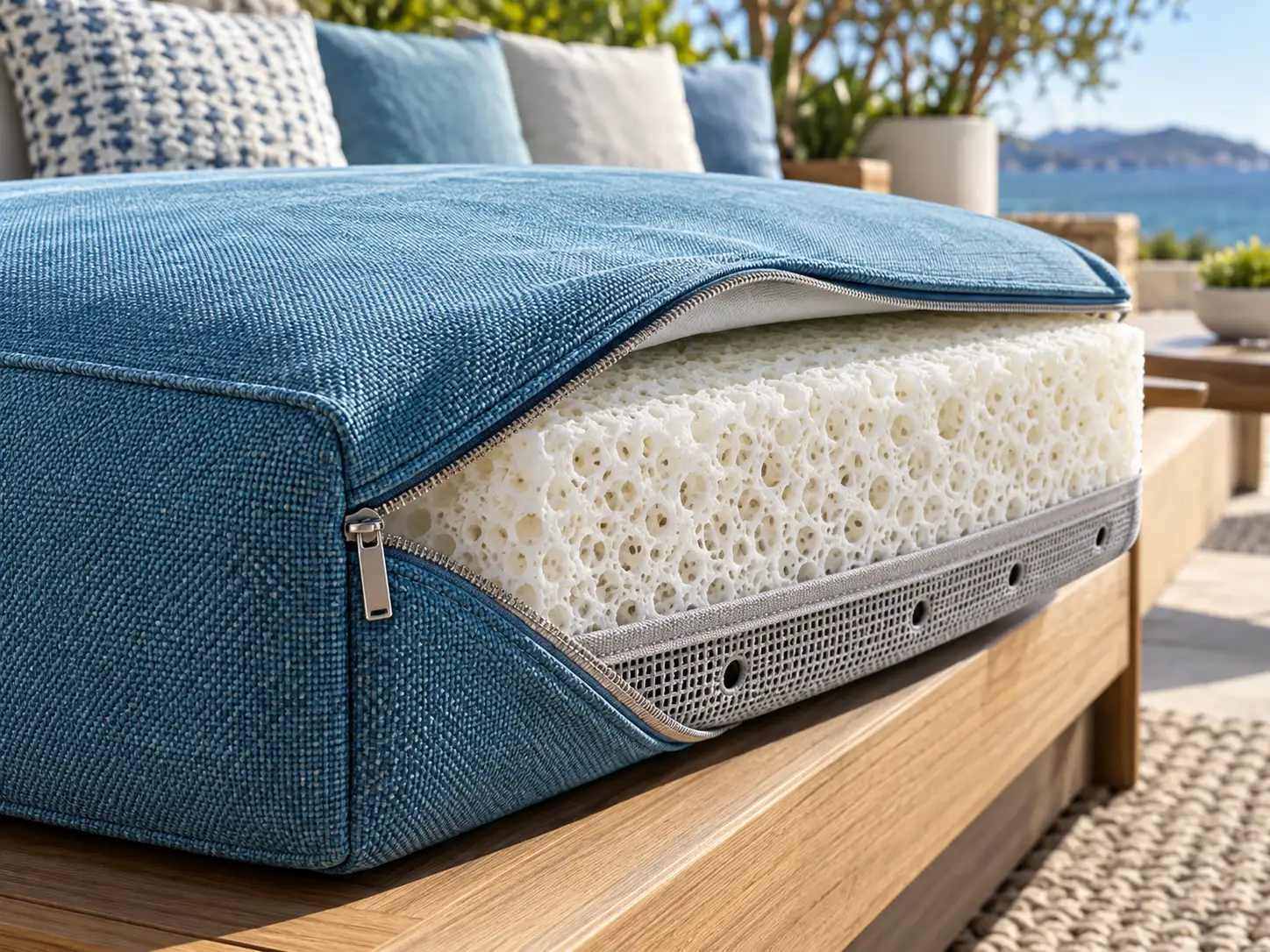
Water-resistant cloth does not mean the cushion dries fast. Water can still sneak in through the seams, zippers, or the bottom side. Once the water is trapped inside, it smells bad. It grows mold and breaks down the foam. A smart outdoor cushion uses good foam, drain holes, air vents, and a cover you can take off. Tough outdoor foam or a quick-dry build is much better than a normal indoor sponge for open seats.
How Color Affects Heat and Visible Fading
Dark blue, dark gray, and black soak up more heat. Light gray, sand, or tan stay cooler. Dark colors can still last a long time if the dye and threads are UV safe. But the outside might feel very hot to touch. Patterns and textures also change how old the cloth looks. Mixed-color woven cloths hide small spots and slow fading much better than one solid, bright color.
What Should You Check Before Buying Sun-Resistant Furniture?
A good product fact sheet should tell you what the item is made of. It should tell you how the outside is protected and what tests it passed. If the tag just says “outdoor grade,” you need to ask more questions.
Ask Where the UV Protection Is Added
Find out if the UV blockers are mixed deep into the plastic or just sprayed on top. For cloth, ask if the yarn is solution-dyed. For aluminum, ask how they clean the metal and do the powder coating.
Check the Frame beneath Wicker
Make sure the hidden frame is aluminum or steel. Then check how thick the metal tubes are. Look at the welds, the feet, the drain holes, and the screws. A beautiful wicker strand cannot save a frame that rusts away or bends.
Look for Relevant Test Data
QUV aging data lets you compare colors and paint strength. Salt-spray testing, like ASTM B117, checks for rust instead of sun damage. This test is very important for beach towns. Temperature rules should also match the exact model. A working range from -40°C to 80°C is great for selling in many places. But this is only helpful if the factory tells you the exact materials, paint, wicker, screws, and test rules.
Match the Product to Its Actual Location
A sunny patio in Spain, a beach cafe, and a cold garden in Canada do not face the same dangers. Sun might be the biggest worry in one town. But salt, heavy rain, or freezing ice might be the top problem in another. Read a local weather guide. Use it to pick the right furniture for your town before you buy a whole set.
How Can You Reduce Sun Damage?
Even the strongest outdoor patio furniture needs a little help.
· Put seats under an umbrella, a tent, or a roof during the hot afternoon sun.
· Bring cushions inside or put them in an airy box when you are not sitting on them.
· Wipe away dust and dirt before they get stuck deep in the wicker or cloth.
· Fix paint chips fast before water touches the bare metal.
· Stay away from strong cleaning soaps unless the maker says they are safe.
· Use covers that breathe. Let wet chairs dry completely before putting the cover on.
· Keep extra feet, screws, covers, and cushion foam so you can fix things easily.
A little shade helps a lot. It also keeps your seats nice and cool. This might make you happier than reading tiny changes in lab tests.
Choosing a Supplier for Sun-Exposed Outdoor Furniture
Joye Industrial and Trading (Hangzhou) Co Ltd makes woven and open-frame outdoor furniture. They build it for importers, store owners, garden centers, and online shops in Europe and North America. Their material plans use aluminum, recyclable PE wicker, stainless steel, outdoor powder coating, and solution-dyed acrylic fabric. Their quality checks look at how the finished item looks and works. They also run weight limits, metal bending, and cloth strength tests. The company also helps with KD construction, safe packing, spare parts, and OEM or ODM projects. Buyers planning a full-sun set can talk about material and paint needs. You can match these to your local weather, price target, packing style, and care steps.
FAQ
Q1: What outdoor furniture material fades the least in direct sun?
A: UV-stabilized HDPE is usually the toughest, low-care pick. Its colors and UV blockers are mixed all the way through. Good powder-coated aluminum also keeps its nice look if the paint is done right.
Q2: Is aluminum or HDPE better for a sunny patio?
A: HDPE is often better for heavy, low-care items. But powder-coated aluminum is super for light frames and eating sets. The best choice depends on local heat, wind speeds, your style, and how much you move the chairs.
Q3: Does synthetic wicker crack in the sun?
A: Cheap wicker gets stiff and breaks. UV-stabilized PE or HDPE wicker does a much better job. It works best when wrapped tightly over a rust-proof aluminum frame.
Q4: Does teak outdoor furniture fade in sunlight?
A: Teak color changes in the sun. It usually turns into a silver-gray shade. This does not always mean the wood is weak or breaking. A good wood oil can help keep that starting golden-brown look.
Q5: How can you keep outdoor cushions from fading?
A: Buy solution-dyed outdoor cloth. Pick light or medium colors. Give them some shade during the hottest part of the day. Put the cushions away when you do not need them. Buying extra covers you can take off will also make the whole set last longer.