

Charcoal Barbecue Sourcing Guide for Retail Buyers
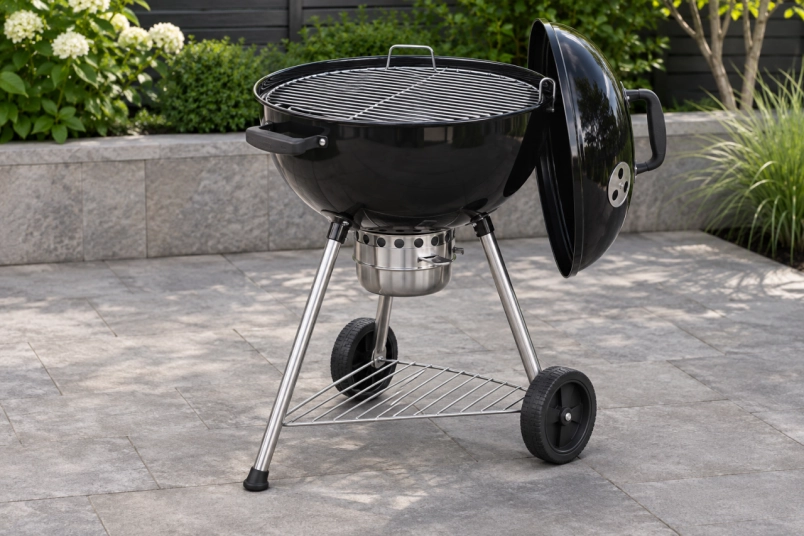
To source a charcoal barbecue range for retail, define the sales channel and product specification before comparing prices. Then assess samples, supporting documents, packaging, delivery commitments, and spare-parts arrangements against the same written requirements. A quotation becomes useful when the configuration and responsibilities are clear enough to compare.
For importers, wholesalers, garden centres, and private-label sellers, the purchasing decision extends beyond the grill itself. Assembly questions, damaged components, unclear instructions, and bulky cartons can all create work after the order arrives. This guide provides a framework for evaluating household outdoor grills intended for resale; commercial kitchen equipment requires a separate assessment.
1. Match Your Charcoal Barbecue Range to the Sales Channel
Define the End User and the Retail Positioning
Start with a short buying brief: where the product will sell, who will use it, and what role it should play in your range. An online seller may prioritise parcel delivery and clear assembly instructions, while a garden centre may also need an assembled display unit and shelf-ready packaging.
Set the intended retail position before requesting features. Describe the customer benefit you need, such as compact storage or a larger cooking surface, rather than asking suppliers for their “best model.” Keep forecasts separate from confirmed order quantities so both parties understand the planning assumptions.
Compare Portable, Kettle, and Trolley Formats
Use product formats to organise your shortlist. For each candidate, compare the cooking surface, assembled footprint, storage needs, handling, and assembly process. A portable design still needs instructions that clearly explain its permitted operating location and surface.
When reviewing a charcoal barbecue range, request current model sheets and identify which formats the supplier actually offers. Avoid treating similar photographs as proof that two models have equivalent materials or construction.
2. Build a Specification Sheet Before Comparing Quotes
Record Cooking Area, Materials, and Assembly Details
A shared charcoal barbecue specification sheet gives each supplier the same basis for quoting. Ask for dimensions with units, material descriptions by component, and a clear list of included parts. Distinguish the cooking grate area from any warming rack rather than accepting a combined figure without explanation.
|
Specification field |
Information to request |
|
Cooking surface |
Usable grate dimensions, shape, and any separately listed warming rack |
|
Main components |
Body, lid, grate, charcoal support, handle, and frame materials and finishes |
|
Product dimensions |
Assembled size, storage configuration where relevant, and net weight |
|
Operation and handling |
Vent arrangement, ash collection, wheels, handles, and assembly steps |
|
Packed product |
Carton dimensions, gross weight, units per carton, and included accessories |
Ask the supplier to identify which measurements are confirmed and which remain provisional. If a design changes during development, update the specification revision before approving production.
Separate Required Features From Optional Accessories
List the base product separately from covers, tools, shelves, or other accessories. Otherwise, a lower quotation may simply omit items included by another supplier.
For wholesale charcoal grills, request separate prices for meaningful configuration changes. Record how each option affects packaging, assembly, minimum quantities, and supporting documents. Do not assume a different finish or grate can be substituted without reviewing its suitability for that component’s use.
3. Evaluate Samples and Model Specific Documentation
Check Assembly, Stability, Edges, and Moving Parts
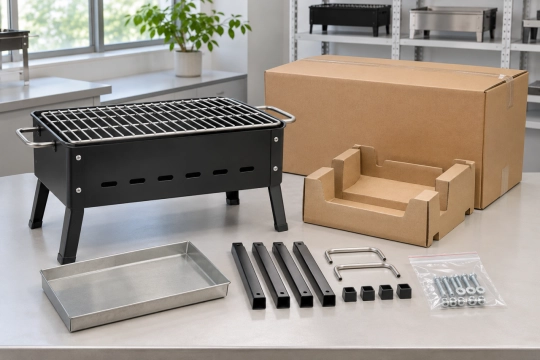
Assemble the charcoal barbecue sample using the instructions supplied in the box. Record missing fasteners, unclear diagrams, alignment problems, and any steps requiring unexpected tools. Photograph the completed unit and retain the instruction version used.
Check visible edges, fastening points, handles, lid movement, wheels, and removable components. Note whether the ash collection parts can be removed and reinstalled as instructed. These observations help identify practical issues, but they do not replace formal safety or performance testing.
Where operating tests are needed, agree on the method, acceptance criteria, and qualified personnel in advance. Do not invent a universal fuel load, test temperature, or durability threshold for every model. Keep an approved reference sample and a written record of any agreed corrections.
Request Evidence That Matches the Model and Destination
Ask which requirements apply to the product and destination, and have the proposed evidence reviewed by a qualified compliance adviser or testing laboratory. Check that documents identify the model, relevant construction, report date, issuing organisation, and scope of assessment.
Treat a supplier’s certification logo or marketplace badge as a prompt for further questions. A factory assessment does not by itself establish that a specific grill meets the requirements for your market.
Review warnings and instructions alongside the product. The US Consumer Product Safety Commission’s charcoal safety guidance warns against burning charcoal in enclosed spaces because of carbon monoxide. This is useful safety information, not a complete compliance checklist for every destination. Confirm the applicable instructions, language, and labelling for your order.
4. Assess Packaging and Private Label Requirements
Review Carton Size, Component Protection, and Handling
Evaluate charcoal barbecue packaging using the distribution route you expect to use. A grill moving through parcel networks may face different handling from a palletised shipment delivered to stores. Ask how the packed product has been assessed for the intended route and whether the tested configuration matches your order.
Check how the grate, legs, lid, and hardware are separated and secured. Look for opportunities for loose metal parts to rub against finished surfaces. Also confirm that unpacking does not scatter small components or make the assembly sequence harder to follow.
Use verified carton dimensions and weights for logistics calculations. If nesting or revised packing changes the carton, request an updated packing specification rather than relying on an earlier loading estimate.
Confirm Branding, Instructions, and Product Identification
For a private label charcoal barbecue, agree on the exact scope of customisation. Separate branding on the product from carton artwork, instruction manuals, barcodes, and other identification requirements.
Approve artwork and translations before printing, with responsibilities recorded for each version. Ask how products and production batches will be identified if a buyer reports a problem. Any branding claim about performance, materials, or permitted use should match the product evidence.
5. Compare Order Economics and Delivery Commitments
Compare Equivalent Specifications and Trade Terms
Compare each charcoal barbecue quotation against the same configuration, quantity, currency, and delivery basis. Record the named place or port and clarify what each party is responsible for paying and arranging.
Build your own cost comparison using the supplier’s price and the other costs relevant to your business: samples, artwork or tooling where applicable, inspection, transport, insurance, import charges, warehousing, and service parts. Use current quotations for each item. Avoid applying a generic freight percentage or assumed retail margin to every model.
If one offer is substantially cheaper, ask which specification, accessory, packaging, or service assumption differs. The answer is more useful than comparing headline unit prices alone.
Confirm Quantity, Production Milestones, and Inspection
Ask whether minimum quantities apply per model, finish, packaging version, or order. Record the agreed quantities and the conditions needed before production can start.
Work backwards from your required warehouse arrival date, distinguishing sample approval, artwork approval, production completion, inspection, dispatch, and transport. A production completion date is not the same as an arrival commitment.
Agree on inspection scope, acceptance criteria, reporting, and the process for addressing nonconformities. Any sampling plan should be agreed for the order; it should not be presented as proof that every unit has been individually tested.
6. Agree on Spare Parts and Prepare a Clear RFQ
Record Parts, Claims Handling, and Change Approval
Before approving a charcoal barbecue order, discuss which parts can be supplied separately and how they will be identified. Request a parts list or diagram and clarify availability, pricing, ordering, and any agreed support period.
Define the information needed for a claim, such as model identification, photographs, batch information, and a description of the issue. Record the remedy process and responsibilities in the commercial agreement. Do not assume a general company warranty applies unchanged to every product.
Require approval for changes to materials, construction, accessories, instructions, or packaging after the reference sample is accepted. Keep revisions traceable so the inspected goods can be compared with the version you ordered.
Send the Supplier a Complete Sourcing Brief
Use this checklist to prepare your charcoal grill sourcing enquiry:
- Destination country and sales channel.
- Intended household outdoor use and preferred product format.
- Required specifications and optional accessories.
- Estimated order quantity and quantity per variant.
- Branding, packaging, barcode, and instruction-language needs.
- Required supporting documents and review process.
- Sample requirements, inspection expectations, and approval milestones.
- Requested delivery basis and target arrival date.
- Spare-parts and claims-handling questions.
Joye Leisure works with importers, wholesalers, and retail channels across its outdoor living business, with BBQ products in its product scope and OEM/ODM cooperation available. For your proposed charcoal barbecue programme, discuss your sourcing requirements with Joye and request model-specific specifications, packaging information, and commercial terms.
7. Frequently Asked Questions
What Should Buyers Ask a Charcoal Barbecue Supplier?
Ask for the current model specification, included accessories, sample process, packaging details, and supporting documents for your destination. Then clarify quantities, commercial terms, inspection arrangements, and spare-parts support. Put the answers into a shared specification and purchasing record so they can be checked against the approved sample and shipment.
What Determines MOQ for a Private Label Order?
Ask the supplier to explain minimum quantities for the model, finish, branding method, and packaging version you want. These may have different production or purchasing constraints. Request a written quotation for your exact configuration and confirm whether combining variants changes the minimum; there is no universal MOQ for all suppliers.
Which Product Documents Should Importers Request?
Start with the specification, assembly and use instructions, product identification details, and proposed test or compliance evidence. Have a qualified adviser identify requirements for the model and destination. Check that each report covers the ordered construction; a certificate name or logo alone does not establish suitability for every market.
How Can Buyers Compare Two Charcoal Grill Quotations?
Align the specifications, accessories, quantities, packaging, currency, and delivery basis first. Then compare relevant logistics, inspection, development, and service costs using current information. Record exclusions and unresolved assumptions. If the totals differ, investigate the underlying configuration and responsibilities before deciding that one offer provides better value.